
Flamingos are one of Africa’s most striking birds, and Tanzania is one of the best places to see them in the wild. In fact, the country’s soda lakes and wetlands support large flocks of both the Lesser Flamingo and the Greater Flamingo, often gathered in the thousands. Best of all, flamingo watching pairs easily with a classic wildlife safari.
Several destinations across northern Tanzania offer excellent flamingo watching, each with its own character. For example, Lake Natron hosts one of the region’s most important flamingo breeding colonies, while Lake Manyara, the Momella Lakes and Ngorongoro Crater all attract flocks depending on the season. Because water levels shift throughout the year, flamingo numbers can vary from one visit to the next.
This guide keeps things simple. First, you will learn what makes Tanzania such a strong destination for flamingo watching. Then, you will discover the best places to see flamingos in Tanzania, how they breed and behave, the best time to visit, and answers to the most common questions travelers ask.
What Makes Tanzania a Good Place for Flamingo Watching?
Tanzania’s landscape includes a chain of alkaline and saline lakes, many of them found within the Great Rift Valley. These salty, mineral-rich waters support the algae and small aquatic organisms that flamingos rely on for food. As a result, the birds gather here in large numbers.
These lake habitats matter for more than just feeding. In addition, the conditions around some soda lakes can provide suitable areas for resting and breeding. Therefore, several Tanzanian lakes have become important sites for both general viewing and breeding.
It is worth understanding the difference between general flamingo viewing and breeding periods. General viewing can happen throughout the year at several lakes, while breeding is far more concentrated, both in timing and location. In particular, Lake Natron stands out as an important breeding site for Lesser Flamingos.
Flamingo Species Found in Tanzania
Two flamingo species occur in Tanzania, and while they look similar at a glance, they have several clear differences.
The Lesser Flamingo
The Lesser Flamingo is the smaller of the two species. It has pink to reddish plumage and a dark bill with a black tip. It mainly feeds on microscopic organisms, including algae and cyanobacteria, using its highly specialized bill to filter food from the water.
In Tanzania, you may see Lesser Flamingos at Lake Natron, Lake Manyara, the Momella Lakes and Ngorongoro Crater. Lake Natron is especially important because of its role in Lesser Flamingo breeding.
The Greater Flamingo
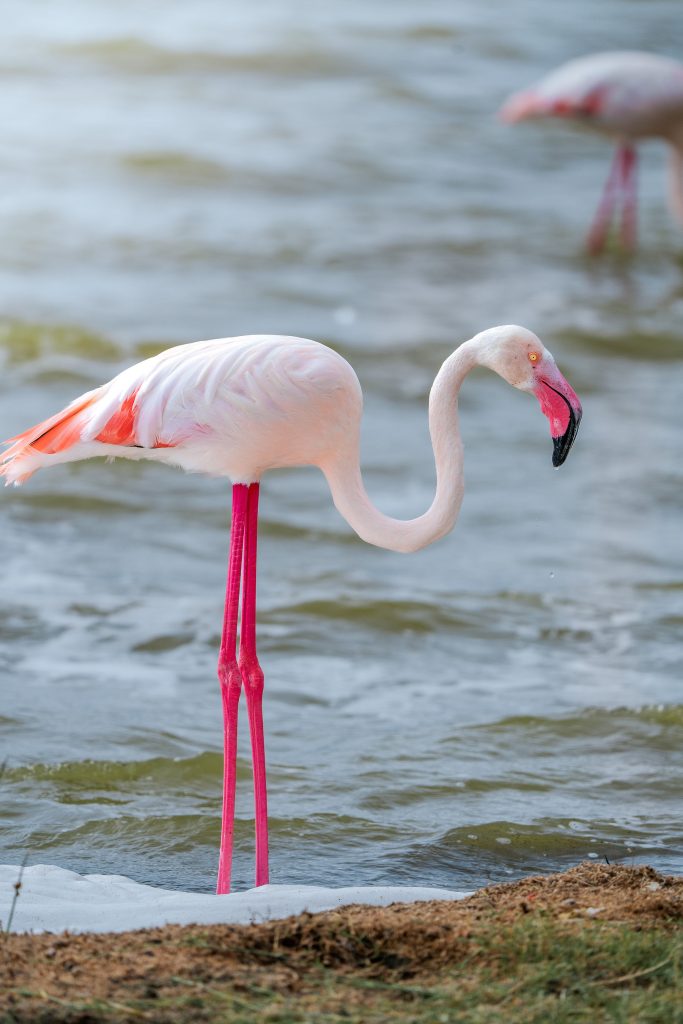
The Greater Flamingo is much taller and generally has paler pink plumage. Its bill has a pink base and a black tip. It feeds on a wider range of aquatic food, including small aquatic organisms and algae.
Greater Flamingos can also occur at several Tanzanian lakes. You may see them mixed with Lesser Flamingos, particularly around wetlands and shallow alkaline lakes.
Where Are the Best Places to See Flamingos in Tanzania?
Lake Natron
Lake Natron sits in northern Tanzania near the Kenyan border, within a remote and dramatic volcanic landscape. It is particularly important for flamingos because its highly alkaline environment provides important conditions for Lesser Flamingo breeding. Ramsar identifies Lake Natron as a regularly used breeding site for the East African Lesser Flamingo population.
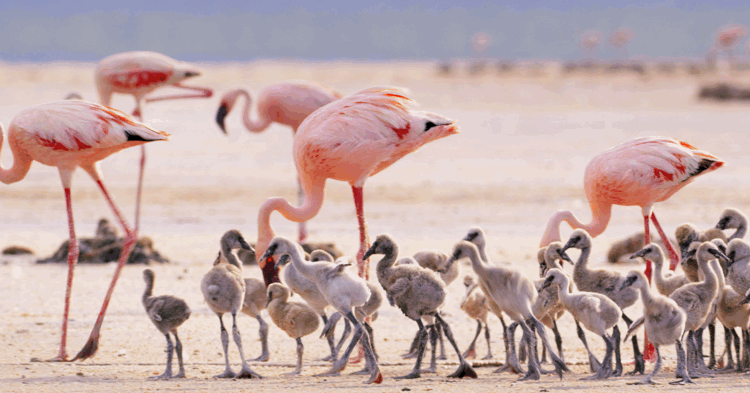
Large flocks gather here for both feeding and breeding. Under suitable conditions, visitors can see impressive numbers of birds around the lake. Breeding and nesting take place on remote mud flats, where flamingos build small mud-cone nests.
Visitors can expect a wild, less-developed experience here compared with the major northern safari parks. In addition, the surrounding landscape features Ol Doinyo Lengai, volcanic scenery, hot and cold springs, and cultural experiences with local Maasai communities.
How to Get to Lake Natron
You can reach Lake Natron by road from Arusha using routes that pass through areas such as Mto wa Mbu, Engaruka and the Rift Valley. TAWA confirms that the area can be reached from Arusha by road through the Mto wa Mbu or Manyara side and then toward Engaruka.
However, the final approach includes rough and unpaved roads. Therefore, a high-clearance 4WD safari vehicle with an experienced driver is recommended, particularly when road conditions become difficult during rainy periods.
Because of its remote location, many travelers visit Lake Natron as an overnight stop rather than as a quick day trip. You can also combine it with a Serengeti safari, making it a useful option for travelers who want both flamingo watching and classic wildlife viewing.
Lake Manyara
Lake Manyara National Park sits along the base of the Great Rift Valley escarpment in northern Tanzania. The park’s alkaline lake attracts Lesser and Greater Flamingos, as well as pelicans, storks and other waterbirds.
Flamingos gather along the shallow edges of the lake when conditions are favourable. Meanwhile, the surrounding park provides opportunities to see elephants, buffalo, giraffes, baboons and, with luck, tree-climbing lions.
Because Lake Manyara is a well-established national park, it combines naturally with a broader safari. However, flamingo numbers can change significantly because water levels and food availability change with environmental conditions.
How to Get to Lake Manyara National Park
Lake Manyara National Park lies on Tanzania’s northern safari circuit, just south of Mto wa Mbu. From Arusha, the drive takes roughly two to two and a half hours by road under normal conditions. The main gate sits close to Mto wa Mbu at the base of the Rift Valley escarpment.
You can reach the park by safari vehicle from Arusha, or you can arrange a flight to Manyara Airstrip and continue by road to the park or your accommodation. Many visitors combine Lake Manyara with Ngorongoro and Serengeti because the destinations fit naturally into the northern safari circuit.
Arusha National Park and the Momella Lakes
The Momella Lakes sit within Arusha National Park, close to Arusha City. These alkaline lakes attract both Greater and Lesser Flamingos, making the area a convenient option for travelers who want bird watching without travelling far from Arusha.
TANAPA notes that the game-viewing track around the Momella Lakes provides opportunities to watch both Lesser and Greater Flamingos. The park also records more than 450 bird species, adding considerable variety to a flamingo-focused visit.
Alongside flamingos, you may see pelicans, waterfowl and other birds. Furthermore, the park offers views of Mount Meru, Ngurdoto Crater and several different habitats.
How to Get to the Momella Lakes
Arusha National Park lies close to Arusha City, making it one of the easiest flamingo destinations to reach. Visitors normally drive from Arusha toward Usa River and then continue to the park entrance and Momella area.
The journey from central Arusha generally takes less than an hour, depending on the entrance and road conditions. From the park entrance, visitors continue by safari vehicle along the internal roads toward the Momella Lakes. A 4WD vehicle is particularly useful during wet conditions.
Arusha National Park also allows guided walking experiences in designated areas. However, visitors should always follow park regulations and use an authorized ranger when required.
Ngorongoro Conservation Area
Flamingos gather around the crater lakes and wetlands within the Ngorongoro Conservation Area, most notably at Lake Magadi on the crater floor. This shallow soda lake can attract large numbers of Lesser Flamingos alongside other waterbirds.
Because most visitors already explore the crater for game viewing, flamingo watching here fits naturally into a standard Ngorongoro safari. Therefore, travelers do not necessarily need to plan a separate flamingo-focused trip.
How to Get to Ngorongoro Crater
From Arusha, the journey to the Ngorongoro Conservation Area takes roughly three hours by road, covering around 180 kilometres depending on the exact starting point and route. The main road passes through the northern safari circuit toward the conservation area.
Most visitors travel with an organized safari vehicle because access and driving inside the conservation area follow specific regulations. Domestic flights can also connect the area with Arusha, Serengeti and Lake Manyara.
When Is the Best Time to See Flamingos in Tanzania?
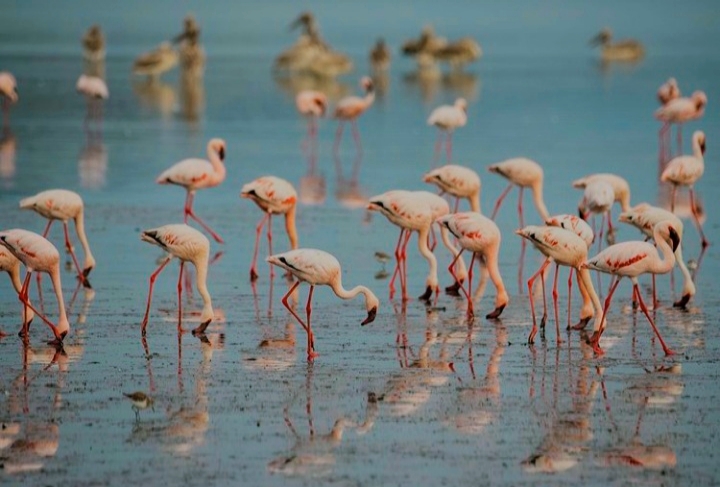
Flamingos can be seen in Tanzania throughout the year, but their numbers and locations can change depending on water levels, rainfall, food availability, and breeding conditions. Lake Manyara, Lake Natron, the Momella Lakes, and Ngorongoro are among the places where visitors can look for flamingos.
For travelers mainly interested in large gatherings of flamingos, the best period can vary from one lake to another. Therefore, it is useful to consider both the season and the specific destination when planning a flamingo-watching safari.
When Is the Flamingo Migration and Movement Season in Tanzania?
Unlike wildebeest, flamingos do not have one fixed migration route or a single migration season. Instead, they move between wetlands when conditions such as water levels and food availability change.
During wetter periods, some lakes and wetlands can provide suitable feeding conditions. As water levels change, flamingos may move to other suitable areas. This means that the number of flamingos at a particular lake can vary during the year.
Which Months Are Best for Flamingo Watching?
- January to March: This can be an interesting period for birdwatching, with suitable conditions at some northern Tanzania wetlands.
- April to May: The long rains can change lake conditions and access, so flamingo distribution may vary.
- June to October: Drier conditions can make some safari routes easier, while flamingos may gather around suitable remaining water sources.
- November to December: The short rains bring changes to wetlands and can create good birdwatching opportunities.
Final Thoughts
Tanzania offers some of Africa’s most memorable flamingo-watching opportunities, from the remote breeding grounds of Lake Natron to the accessible lakeshores of Manyara, Arusha and Ngorongoro. Each location offers a slightly different experience, shaped by water levels, season and surrounding scenery.
By choosing the right combination of lakes and travelling with a knowledgeable guide, visitors can enjoy remarkable flamingo sightings alongside Tanzania’s incredible wildlife. Most importantly, responsible viewing helps protect these birds and the wetlands they depend on for the future..
