
The Maasai are one of the best-known cultural communities in Tanzania and East Africa. They are traditionally pastoralists, with cattle playing an important role in their economy, social life, traditions, and cultural identity. Maasai communities are mainly found across northern Tanzania, especially in areas around Arusha, Manyara, and Ngorongoro, as well as southern Kenya. Their traditional language is Maa.
For many travelers, the Maasai are especially familiar because of their colorful clothing, beautiful beadwork, traditional dances, cattle, and villages. In Tanzania, Maasai communities can be found in and around Ngorongoro, Monduli, Longido, Manyara, Tarangire, and Lake Natron. However, Maasai culture is much broader than the images commonly seen in tourism. It includes family life, age groups, oral traditions, beliefs, ceremonies, livestock keeping, crafts, and strong community relationships.
Today, Maasai communities continue to maintain many traditions while also adapting to education, technology, tourism, modern healthcare, changing economic opportunities, and other influences. Therefore, the Maasai should not be viewed only through their traditional past. They are a living community whose culture continues to develop.
Where Do the Maasai Live in Tanzania?
Maasai communities are strongly associated with northern Tanzania. They can be found in areas around Arusha, Monduli, Longido, Manyara, Ngorongoro, and Lake Natron, among other parts of the northern region.
The Ngorongoro area is particularly important for travelers because Maasai communities live within the wider conservation landscape. The Ngorongoro Lengai Geopark describes the Maasai as one of the prominent ethnic groups in the area and documents their pastoral way of life.
For visitors, this means Maasai culture can sometimes be included naturally in a northern Tanzania safari. A traveler visiting Ngorongoro, for example, may have an opportunity to visit a cultural boma or community as part of a wider itinerary.
However, it is important to remember that a Maasai community should not be treated as a single tourist attraction. Different communities have their own experiences, traditions, and relationships with tourism.
A Brief History of the Maasai People
The history of the Maasai is closely connected to pastoralism and movement across East Africa. Historical accounts place Maasai communities in areas of present-day Tanzania and Kenya, where they developed a way of life strongly connected to livestock and grazing land.
The Ngorongoro Lengai Geopark states that the Maasai are thought to have migrated southeast from the Nile region and became established in the Ngorongoro area.
Over time, changes in land use, colonial administration, conservation policies, population growth, education, markets, and modern development affected Maasai communities in different ways.
Consequently, modern Maasai life cannot be understood only through historical traditions. Many communities continue pastoral practices while also participating in education, tourism, business, agriculture, and other parts of the modern economy.
Maasai Culture and Traditional Way of Life
Maasai culture includes many parts of everyday life, from family relationships and livestock keeping to clothing, ceremonies, songs, food, and oral traditions.
Traditionally, Maasai society has been organized around age groups, clans, family relationships, and different stages of life. Elders have important social roles, while younger members traditionally have responsibilities connected with livestock, family, and community life.
Furthermore, songs, stories, proverbs, and ceremonies have helped pass knowledge between generations. Maasai oral traditions continue to provide ways of sharing history, values, experiences, and cultural knowledge.
Nevertheless, Maasai communities are not identical. Traditions can vary according to location, age, family, and community. Modern life has also influenced how some traditions are practiced today.
Why Cattle Are Important to the Maasai
Cattle are one of the most important parts of traditional Maasai life.
Historically, cattle have provided food and economic value while also being connected to social relationships, wealth, ceremonies, and community identity. Cattle ownership can also have social meaning within Maasai communities.
Milk and meat have traditionally been important foods, while cattle can also be exchanged during important social relationships and events.
For this reason, understanding the importance of cattle helps visitors understand why livestock appear so often in Maasai stories, traditions, songs, and daily activities.
What Language Do the Maasai Speak?
The traditional language of the Maasai is Maa. The name “Maasai” is commonly connected with the Maa language and the people who speak it.
However, Maasai people in Tanzania may also speak Kiswahili, the national language of Tanzania. Some also use English, particularly in education, tourism, business, and other modern settings.
Therefore, language use can differ between individuals and communities. A Maasai person may use Maa within the community while using Kiswahili or English when communicating with people from other backgrounds.
Maasai Clothing and Traditional Dress
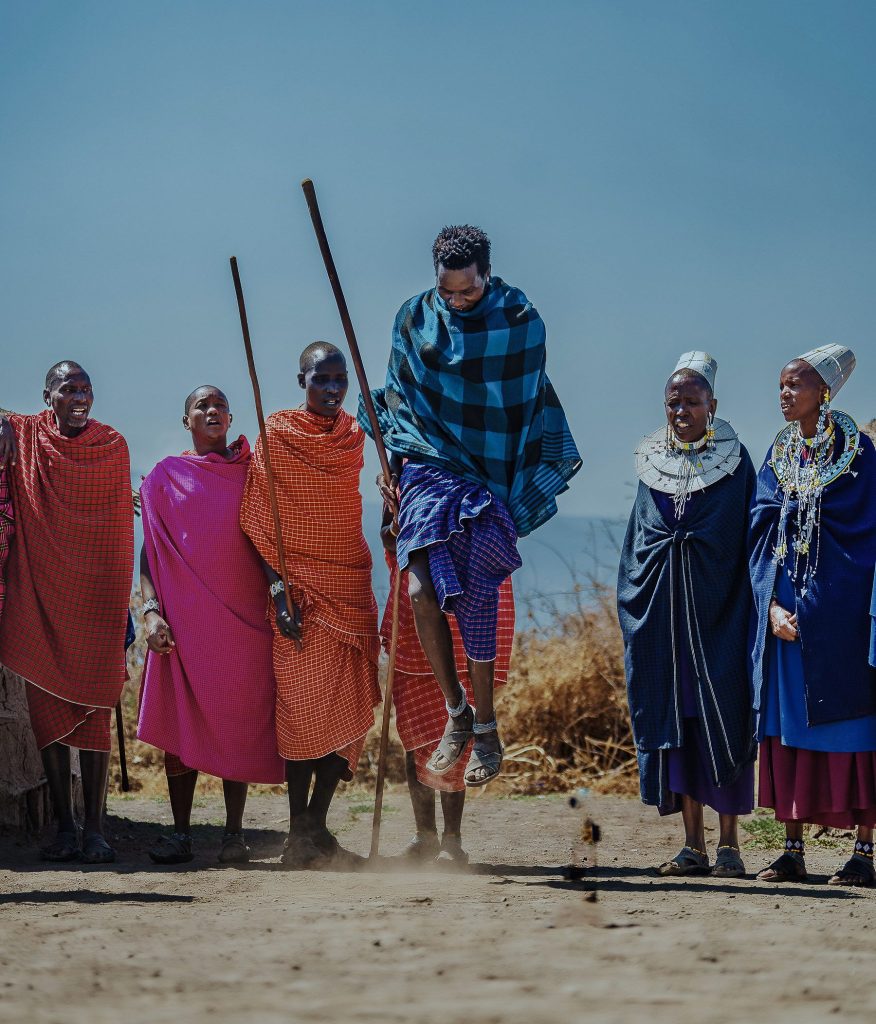
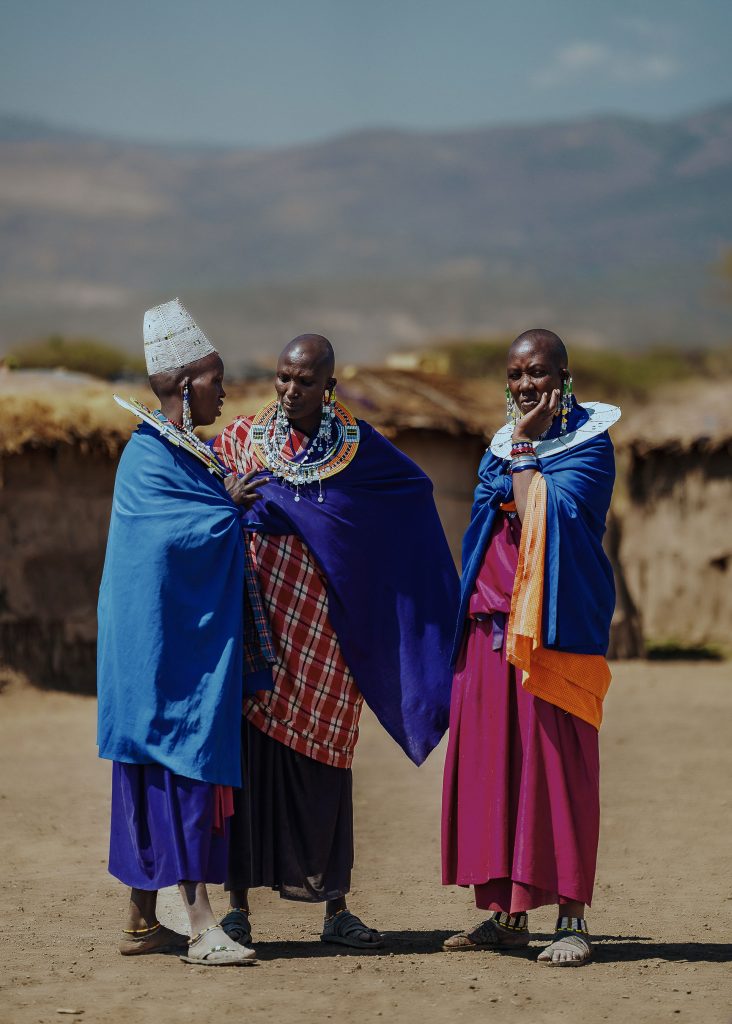
Maasai clothing is one of the most recognizable features of their culture. Bright fabrics, colorful ornaments, and distinctive styles can communicate cultural identity and, in some contexts, age, gender, or social position.
The shúkà, a cloth commonly associated with Maasai dress, is particularly well known. Red is strongly associated with Maasai clothing, although other colors such as blue, black, and striped patterns can also be seen.
Importantly, Maasai clothing is not simply a uniform. Styles can change according to age, gender, social stage, location, and occasion. Research documented among Maasai communities in Arusha shows that clothing can be connected with different stages of life and the age-set system.
Maasai Beadwork and Traditional Jewelry
Colorful beadwork is another important part of Maasai cultural expression.
Maasai jewelry can include necklaces, bracelets, earrings, belts, and other decorated items. Beadwork is often made by hand and can require considerable skill and time.
Women have traditionally played an important role in producing beadwork and other crafts. These items can carry cultural and social meanings while also providing opportunities for income.
For travelers, handmade Maasai jewelry can also be an important part of a cultural visit. Buying crafts directly from local artisans can provide a way to support community members when the transaction is fair and respectful.
Traditional Maasai Houses and Villages
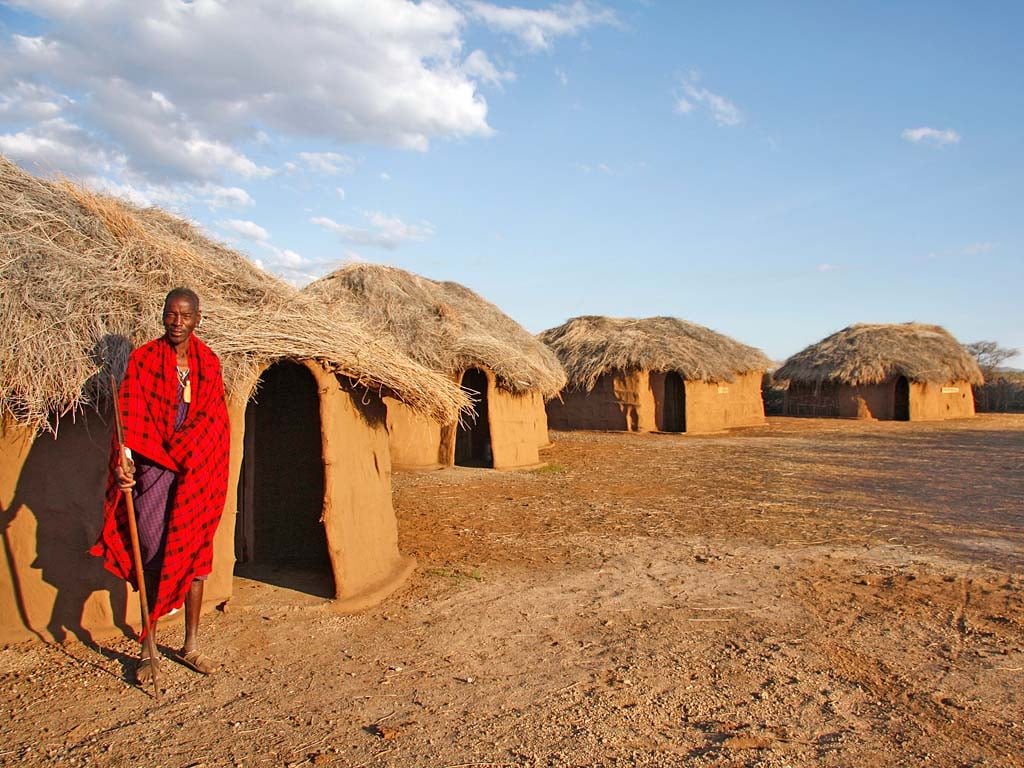
Traditional Maasai settlements are commonly known as a boma or enkang.
A boma can contain several traditional houses together with an area for livestock. Traditional houses were designed using locally available materials and were suitable for communities whose livelihoods depended heavily on livestock and movement.
Traditionally, Maasai women have played an important role in constructing these houses. The Ngorongoro Lengai Geopark describes traditional Maasai houses as being made from locally available materials and notes the role of women in their construction.
Today, housing styles can vary. Some Maasai families live in more modern homes, while traditional structures continue to be used in some communities.
What Do the Maasai Eat?
Traditional Maasai food has historically been closely connected to livestock.
Milk and meat have been important foods, while blood has also had a traditional role in some Maasai dietary practices. However, the diet of Maasai communities has never been completely isolated from wider changes.
For example, some Maasai communities also grow or consume crops. Research from a Maasai community in Arusha documents maize as an important part of the local food system, including maize porridge prepared with milk or water.
Therefore, it would be misleading to say that every Maasai person today eats exactly the same traditional foods. Modern markets, education, settlement patterns, agriculture, and changing lifestyles have all influenced diets.
Maasai Warriors and the Moran Tradition
The word Moran is commonly used for young Maasai men in the traditional warrior stage of the age-set system.
Traditionally, Morans have had responsibilities connected with protecting livestock and the community. They may also have responsibilities related to herding and learning skills expected of young men in their age group.
Warriorhood is only one stage of the wider Maasai age-set system. Therefore, it is inaccurate to describe every Maasai man as a warrior.
As Maasai communities have changed, the roles and responsibilities associated with different age groups have also been influenced by modern education, employment, technology, and changing community needs.
Maasai Dance, Songs and Ceremonies
Music and dance are important parts of Maasai cultural expression.
One of the most famous performances associated with Maasai culture is the adumu, often described to visitors as the Maasai jumping dance. Singing and rhythmic movement can accompany cultural celebrations and other gatherings.
Maasai oral traditions also include stories and proverbs. These provide ways to pass cultural knowledge and values from one generation to another.
During a cultural tourism visit, travelers may see singing or dancing. However, these performances represent only one part of a much wider cultural tradition.
Maasai Beliefs and Religion
Traditional Maasai spiritual beliefs are closely connected with Engai or Enkai, the name used for God in the Maa language.
Traditional accounts describe Engai as the creator and connect cattle with Maasai spiritual beliefs. Cattle therefore have significance that goes beyond their economic value.
At the same time, it is important to recognize that religious life among Maasai people today can vary. Modern Maasai communities have experienced different religious and social influences, so traditional beliefs should not automatically be assumed to describe every Maasai person today.
The Role of Maasai Women
Women play important roles in Maasai family and community life.
Traditional responsibilities have included caring for children, preparing food, collecting water and firewood, milking livestock, managing household activities, and constructing traditional homes. Women have also played an important role in beadwork.
However, these traditional roles are not the whole story of Maasai women today. Education, tourism, business, technology, and other opportunities have contributed to changes in women’s roles and responsibilities.
Therefore, a modern article about the Maasai should recognize both traditional responsibilities and the changing opportunities available to women.
What Is Daily Life Like for the Maasai?
Daily life can be different from one Maasai community to another.
In pastoral communities, livestock remains important. Families may spend time caring for cattle and other animals, while children attend school and adults take part in household, community, economic, or educational activities.
Markets and towns also play an increasingly important role in modern Maasai life. Some community members work in tourism, business, education, government services, or other professions.
As a result, there is no single daily routine that describes every Maasai person. Traditional pastoral life continues in some places, while other communities have adopted different combinations of pastoralism, agriculture, education, business, and modern employment.
Visiting a Maasai Village in Tanzania
For travelers, visiting a Maasai village can provide an opportunity to learn about culture beyond the wildlife seen on safari.
Depending on the community, visitors may tour a boma, enter a traditional house, learn about livestock, listen to stories, see cultural dances, learn about beadwork, taste local food, or purchase handmade crafts.
For example, the Seneto Cultural Boma in the Ngorongoro area was established to create an opportunity for visitors to learn about Maasai life. The Ngorongoro Lengai Geopark explains that visitors can see traditional homes, experience food and dances, hear folktales, and purchase local products.
However, travelers should remember that cultural tourism should be approached as an opportunity to learn and interact respectfully rather than simply as a photo opportunity.
Where Can You Experience Maasai Culture?
Northern Tanzania provides several opportunities to learn about Maasai culture.
Maasai Culture Around Ngorongoro
The Ngorongoro area is one of the most accessible places for travelers interested in combining wildlife and cultural experiences. Maasai communities live within the wider conservation landscape, and cultural bomas provide opportunities to learn about local traditions.
Maasai Communities Near Arusha
Arusha provides access to several Maasai communities and cultural experiences. It can therefore be a convenient place to add a cultural activity before or after a safari.
Maasai Experiences Around Manyara
Travelers exploring the Manyara area may also encounter Maasai communities and cultural experiences depending on their route and local arrangements.
Maasai Communities Near Tarangire
The wider Tarangire area is associated with Maasai pastoral communities. A cultural experience can sometimes be combined with a Tarangire safari.
Maasai Communities Around Lake Natron
Lake Natron and its surrounding areas are also associated with Maasai communities. Travelers visiting the region can combine wildlife, landscapes, and cultural experiences depending on the itinerary.
How to Visit a Maasai Community Respectfully
A respectful attitude is one of the most important parts of a cultural visit.
Ask before taking photographs. People should not automatically be treated as subjects for photographs simply because they are part of a cultural experience.
Follow local rules. Your guide or community representative can explain where visitors can go and what activities are appropriate.
Dress appropriately. Comfortable and modest clothing is generally a good choice when visiting a community.
Listen and ask questions. A cultural visit becomes more meaningful when travelers take time to listen rather than simply watching a performance.
Do not assume every Maasai community is the same. Traditions and lifestyles can vary between communities.
Buy crafts fairly. If you want to support local artisans, buying handmade products can be a meaningful part of the experience.
Ask how tourism benefits the community. Responsible travelers can ask tour operators or community representatives how tourism income is managed.
Maasai Culture in Modern Tanzania
Maasai culture continues to change as communities interact with the wider modern world.
Education has created new opportunities for children and young adults. Mobile phones and other technologies have changed communication. Tourism has created employment and business opportunities in some areas, while modern markets have influenced livelihoods.
At the same time, pastoral communities continue to face challenges connected with land, climate, water, livestock, conservation, and changing economic conditions.
Young Maasai people may now combine traditional cultural knowledge with formal education, modern employment, business, technology, or tourism.
Therefore, Maasai culture should not be presented as something frozen in the past. It is a living culture that continues to adapt while maintaining important traditions. Research documenting Maasai communities in Arusha also highlights the way traditions have continued alongside modernization and technological change.
Frequently Asked Questions About the Maasai People
Who are the Maasai people in Tanzania?
The Maasai are an Eastern Nilotic ethnic group traditionally associated with northern Tanzania and southern Kenya. They are particularly known for their pastoral traditions, cattle, distinctive clothing, beadwork, age-set system, and cultural traditions.
Where do the Maasai live in Tanzania?
Maasai communities are mainly associated with northern Tanzania, including areas around Arusha, Manyara, Monduli, Longido, Ngorongoro, and Lake Natron.
What are the Maasai famous for?
The Maasai are widely known for their cattle-keeping traditions, colorful clothing, beadwork, cultural dances, songs, age-set system, and distinctive pastoral lifestyle.
What is Maasai culture like?
Maasai culture includes strong community relationships, livestock keeping, age groups, family responsibilities, ceremonies, oral traditions, clothing, beadwork, music, dance, and traditional beliefs.
What language do the Maasai speak?
The traditional language is Maa. Many Maasai people in Tanzania also speak Kiswahili, while English may be used in education, tourism, business, and other settings.
Why are cattle important to the Maasai?
Cattle have traditionally been important for food, wealth, social relationships, trade, ceremonies, and cultural identity. They remain an important part of Maasai pastoral life.
What do Maasai people wear?
Maasai clothing commonly includes colorful fabrics such as the shúkà and various forms of beadwork and jewelry. Clothing styles can differ according to age, gender, social position, location, and occasion.
What food do the Maasai eat?
Traditional Maasai diets have included milk and meat, with blood also having a traditional role in some communities. Modern Maasai diets can also include crops and foods purchased from markets.
What are Maasai warriors called?
Young men in the traditional warrior stage are commonly called Morans. Warriorhood is part of a wider age-set system and does not describe every Maasai man.
Can tourists visit a Maasai village in Tanzania?
Yes. Some Maasai communities and cultural bomas receive visitors. Experiences vary, so travelers should choose a responsible cultural experience and respect local rules and privacy.
Final Thoughts
The Maasai people are an important part of Tanzania’s cultural identity, particularly in the country’s northern regions. Their history, pastoral traditions, cattle, clothing, beadwork, language, ceremonies, and community life have made Maasai culture one of the most recognizable cultural traditions in East Africa.
However, the Maasai are not only a symbol of traditional Tanzania. Maasai communities continue to adapt to education, technology, tourism, modern employment, changing markets, and environmental challenges while maintaining many important cultural traditions.
For travelers, learning about the Maasai can add another dimension to a Tanzania safari. A visit to a Maasai community can provide an opportunity to understand the people and culture connected to the landscapes of Ngorongoro, Arusha, Manyara, Tarangire, and Lake Natron.
Most importantly, visitors should approach Maasai culture with curiosity, respect, and an open mind. Learning about a living community is more meaningful when travelers take time to listen, ask questions, and understand that traditions can vary and continue to change.
