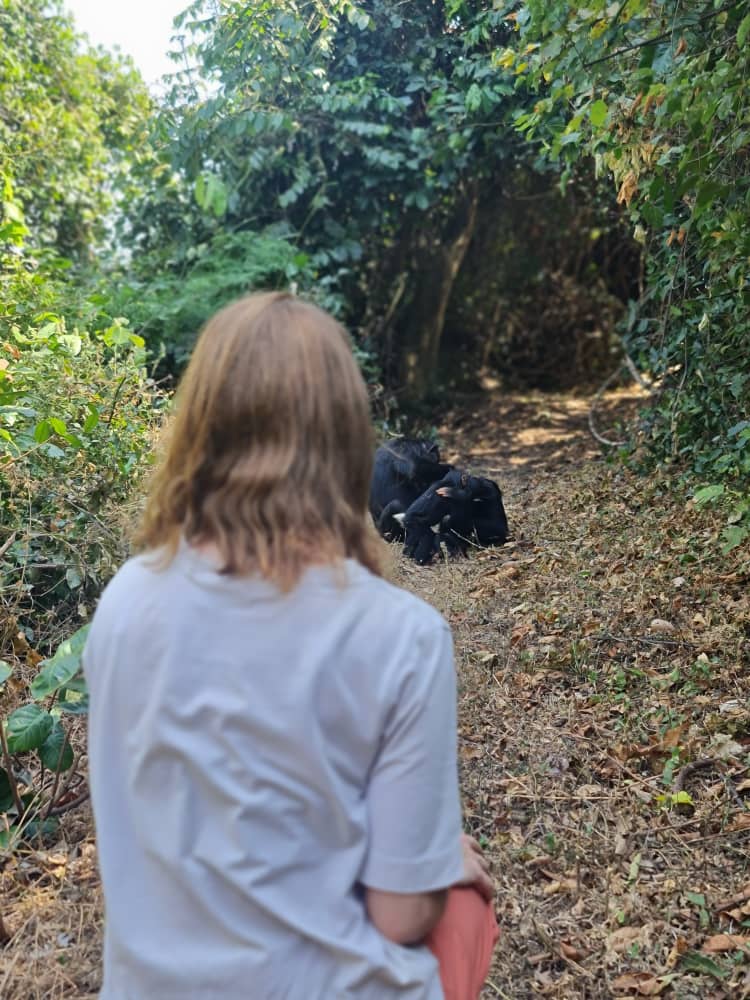
Chimpanzee trekking in Tanzania is a walking safari through thick rainforest in search of wild chimpanzees, our closest living relatives. Guides follow tracks, feeding signs, and calls through the trees until a family group comes into view. As a result, it offers a level of closeness that no vehicle-based safari can match. It stands out as one of the most personal wildlife experiences in East Africa.
Tanzania offers this experience in only a few remote, lake-side parks. Gombe Stream National Park, made famous by Jane Goodall’s decades of research, holds around 90 well-studied chimps in a compact forest on Lake Tanganyika. Mahale Mountains National Park is larger and wilder, with one of Africa’s biggest wild chimp populations. Meanwhile, Rubondo Island National Park, set in Lake Victoria, adds elephants, hippos, and antelope alongside its chimps.
A typical trek starts early and can last anywhere from thirty minutes to a few hours, depending on chimp movement. Once the group is found, visitors usually have about an hour for close observation. Trekking runs year-round. However, the dry season from May to October offers easier trails, while the wet season often brings chimps lower for better sightings. Because permits are limited and each park is boat-accessed, most visitors combine chimpanzee trekking with a wider Tanzania safari itinerary rather than a standalone trip.
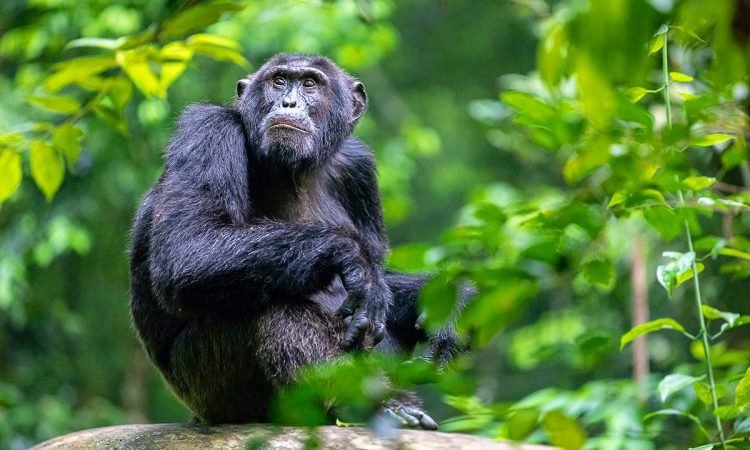
Where to Find the Best Places for Chimpanzee Trekking in Tanzania
Gombe Stream National Park
Tanzania’s smallest park is also the place where Jane Goodall studied chimps for decades. Around 90 chimps live here, split into small and well-known family groups. Therefore, visitors can enjoy a unique experience while learning about the long history of chimpanzee research in the area.
Mahale Mountains National Park
A much bigger and wilder park, Mahale is home to one of Africa’s largest wild chimp populations. Treks climb through rainforest and bamboo, while Lake Tanganyika can be seen below. In addition, the combination of mountains, forest, and lake makes the setting especially beautiful.
Rubondo Island National Park
Rubondo Island National Park is an island park inside Lake Victoria. Here, chimps live alongside elephants, hippos, and antelope. As a result, it gives visitors a broader wildlife experience than the other two parks.
Gombe suits a short and easy trip with a strong history behind it. Mahale, on the other hand, suits travelers who want deep wilderness and more space. Also, Rubondo works well if you want to see chimps plus other animals in one place. You can pair any of the three with a walking safari in Tanzania for more time on foot.
Finding Out the Best Time for Chimpanzee Trekking in Tanzania
Chimpanzee trekking runs all year in Tanzania. However, the dry months from around May to October make trails firmer and easier to walk. During this period, chimps also tend to stay lower on the hillside, which can shorten the walk.
The wet season, roughly November to May, brings more fruit into the forest. As a result, this can pull chimp families down toward camp, so sighting chances often go up. However, the trade-off is muddy paths and more humid air.
Neither season is a wrong choice. Therefore, pick the dry months if easy walking matters most to you. Alternatively, choose the wet months if you want a stronger chance of a close sighting. If you are still planning your dates, check our guide to the best time to visit Tanzania.
What a Typical Chimpanzee Trekking Day Looks Like
A trek starts early, right after breakfast. First, rangers use fresh tracks and the last known nesting spot to guess where the chimps have moved. Some walks take thirty minutes, while others can take several hours.
Once the group finds the chimps, guides give everyone about one hour to watch. During this time, you may see grooming, feeding, or play between chimps that guides have followed for years. In addition, voices stay low the whole time to avoid disturbing the animals.
The rest of the day is usually free. For example, many guests relax by the lake, take a short walk, or watch birds. Therefore, a trek is the main activity rather than an all-day event. This also gives visitors time to rest afterward.
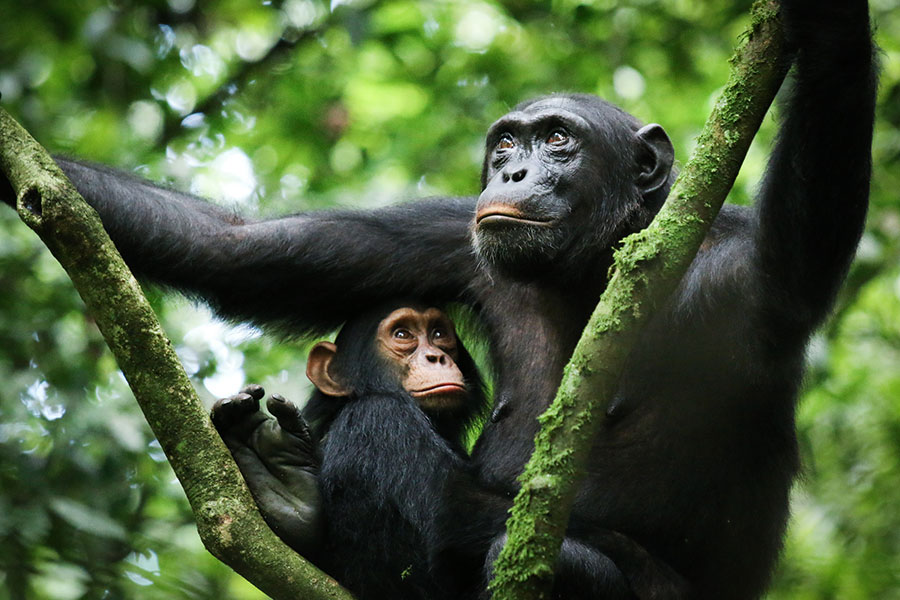
What Species You Can See on Chimpanzee Trekking
Chimpanzees are the main attraction, but the forest holds far more life than that. In addition, each park has its own extra species worth watching for along the trail.
Gombe Stream National Park
- Olive baboons
- Red colobus monkeys
- Blue monkeys
These species share the same forest as the chimps. Therefore, there is plenty to look for between chimpanzee sightings.
Mahale Mountains National Park
- Red colobus monkeys
- Over 300 bird species
These animals live alongside a much larger chimp population. In addition, the forest provides excellent opportunities for birdwatching.
Rubondo Island National Park
- Sitatunga antelope
- Elephants
- Hippos
- African fish eagles
These species add variety beyond the chimps alone. As a result, Rubondo offers a wider mix of wildlife in one destination.
Birdlife stands out across all three parks, so it helps to look up now and then. In addition, the IUCN Red List tracks the conservation status of chimpanzees and many of these other species. Most of them face pressure from habitat loss.
Gombe National Park
Besides chimpanzee trekking, you can enjoy:
- Forest and nature walks
- Birdwatching
- Monkey watching
- Butterfly watching
- Hiking
- Boat trips on Lake Tanganyika
- Fishing in permitted areas
- Relaxing and swimming along Lake Tanganyika
Mahale Mountains National Park
Besides chimpanzee trekking, you can enjoy:
- Forest and nature walks
- Hiking in the Mahale Mountains
- Birdwatching
- Swimming in Lake Tanganyika
- Kayaking
- Boat trips
- Fishing in permitted areas
- Beach relaxation
- Wildlife and forest photography
What Makes Chimpanzee Trekking in Tanzania So Special
Few activities let you stand a few meters from a wild chimpanzee family going about its day. In addition, many chimps in Gombe and Mahale have been studied for decades. As a result, guides often know individual animals by name and history.
The setting adds even more to the experience. Both parks sit right on Lake Tanganyika, one of the clearest and deepest lakes in the world. Therefore, a morning trek through dense forest can end with an afternoon swim by the shore.
Rarity also plays a part. Permits are limited, the parks are remote, and every step happens on foot. Because of this, the whole day feels earned in a way that few other safari activities can match. You can also learn more about the organization behind this research through the Jane Goodall Institute.
How Hard Chimpanzee Trekking Really Is
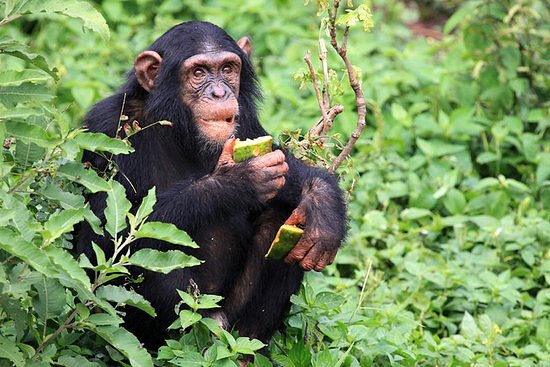
Trek difficulty depends on where the chimps slept the night before. Unfortunately, nobody can predict this in advance. Some days bring a short and gentle walk under an hour. However, other days require several hours on steep and humid trails.
Mahale’s terrain climbs higher and steeper than Gombe’s easier paths. Therefore, a normal level of fitness makes either trek far more enjoyable. Rubondo’s flatter island trails, meanwhile, suit almost anyone.
Guides set a slow and steady pace with plenty of rest stops. In addition, porters can carry a daypack on longer routes. Tell your operator about any fitness concerns early. This allows them to suggest the right park for you.
How to Get to Gombe and Mahale
Both parks sit far from any main road. Therefore, getting there usually takes a flight plus a boat. Small planes connect Arusha, the Serengeti, Ruaha, and Katavi to airstrips near Lake Tanganyika.
From the Mahale airstrip, a boat ride of about ninety minutes finishes the trip. This distance is part of why Mahale still feels so wild and untouched. Gombe sits closer and can be reached by a boat ride from the town of Kigoma.
Because of these long transfers, most trips combine chimp trekking with another part of a Tanzania safari. Therefore, plan flight and boat connections early. This helps avoid tight timing between the two legs.
Whether Chimpanzee Trekking Permits Are Required
Yes, every park requires a permit, and each day only allows a set number of trekkers. This rule helps protect chimp families from too much contact with visitors. Usually, your lodge or operator
Frequently Asked Questions About Chimpanzee Trekking in Tanzania
Where is chimpanzee trekking available in Tanzania?
Chimpanzee trekking is available in several destinations, including Gombe Stream National Park, Mahale Mountains National Park, and Rubondo Island National Park. Each destination offers a different combination of forest, wildlife, and lake scenery.
When is the best time to visit Tanzania for chimpanzee trekking?
Chimpanzee trekking is available throughout the year. However, May to October usually brings firmer and easier trails, while the wetter months can also offer good chimpanzee sightings when fruit attracts groups toward lower areas.
How long does a chimpanzee trekking experience take?
A trek can take anywhere from about 30 minutes to several hours. The duration depends mainly on where the chimpanzees have moved and how far the guides need to walk to find them.
How close can visitors get to wild chimpanzees?
Visitors can get relatively close to wild chimpanzees when conditions allow. However, guides maintain the required distance and follow park rules to reduce disturbance and protect both visitors and chimpanzees.
Is chimpanzee trekking suitable for first-time safari travelers?
Yes. First-time safari travelers can enjoy chimpanzee trekking with the support of experienced guides and rangers. However, the walking conditions vary between parks, so travelers should consider their fitness level when choosing a destination.
How difficult is chimpanzee trekking in Tanzania?
The difficulty varies by park and by day. Some walks are short and gentle, while others involve steep, humid forest trails. A reasonable level of fitness can make the experience more comfortable.
How much does chimpanzee trekking in Tanzania cost?
The total cost depends on the park, trekking permits, accommodation, transport, season, and length of the itinerary. Remote destinations such as Mahale can also require additional flight and boat transfers.
Are chimpanzee trekking permits required in Tanzania?
Yes. Visitors need a chimpanzee trekking permit, and the number of visitors may be limited each day. A safari operator or lodge can normally arrange the necessary permits before the trek.
Is chimpanzee trekking suitable for families with children?
Children may be able to join chimpanzee trekking depending on the park’s current age requirements. Families should confirm the minimum age, walking conditions, and park rules before booking.
What should travelers pack for chimpanzee trekking?
Comfortable hiking shoes, long trousers, a light long-sleeved shirt, and a waterproof jacket are useful. Travelers should also consider carrying drinking water, insect repellent, a small backpack, and binoculars.
Final Thoughts
Chimpanzee trekking in Tanzania offers a different way to experience wildlife. Instead of watching animals from a safari vehicle, visitors walk through the forest and follow signs that lead toward wild chimpanzees.
Gombe, Mahale, and Rubondo each offer a different experience. Travelers can combine chimpanzee encounters with rainforest walks, birdwatching, lake activities, and other wildlife experiences.
If you are planning a Tanzania safari and want to add chimpanzee trekking, tell us your travel dates and interests. We can help you include Gombe, Mahale, or Rubondo in a wider Tanzania safari itinerary.