
A walking safari in Tanzania lets you explore the bush on your own two feet. You can see animal tracks, dung, birds, plants, and other small details that you may miss from a safari vehicle. In addition, with an armed ranger and an experienced guide, you can learn how to read the bush like a local tracker.
Not every park in Tanzania allows walking safaris. Safety and conservation rules control where visitors can walk. However, several destinations offer excellent walking experiences. These include Arusha National Park, Tarangire National Park, Lake Manyara National Park, Nyerere National Park, Mikumi National Park, Katavi National Park, Gombe National Park, Mahale Mountains National Park, and Saanane Island National Park.
Some walks are short and easy. On the other hand, others can last several hours and take you through grassland, forests, riverbeds, and remote areas. Therefore, choosing the right park can make a big difference to your experience.
This guide explains where to go for a walking safari in Tanzania. It also covers the best time to visit, what a typical walk is like, the animals you may see, safety, fitness, and what to pack. By the end, planning a walking safari should feel simple and easy.
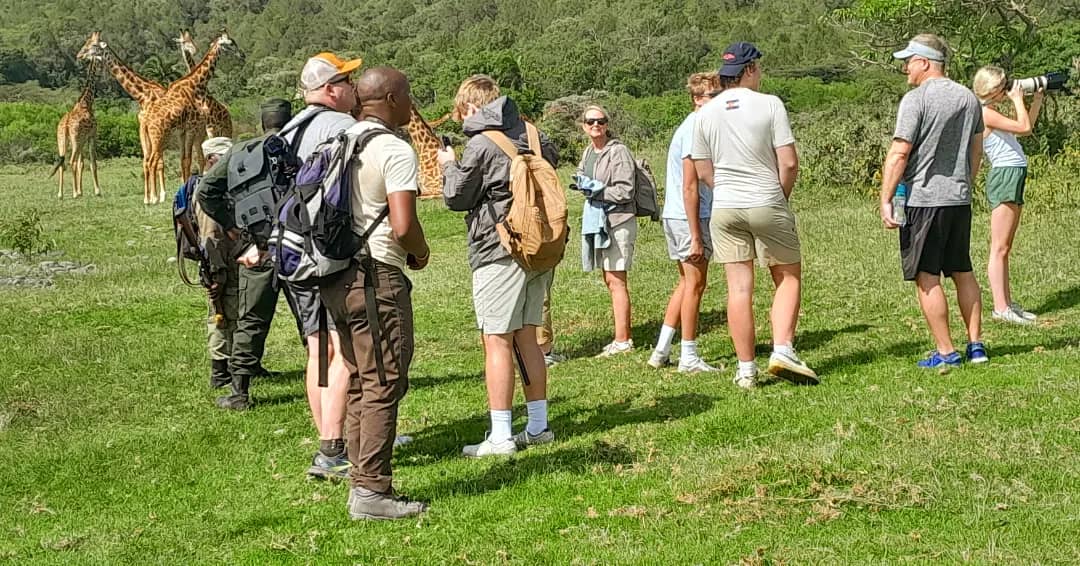
Where to Find the Best Places for a Walking Safari in Tanzania
Only certain parks and reserves in Tanzania are set up for walking safaris. These areas have trained guides and rangers who can safely lead visitors on foot. Therefore, the destinations below are some of the main places to consider.
Arusha National Park
Arusha National Park is a great choice for a short walking safari. It is close to Arusha town and offers beautiful views of Mount Meru. It is also a good option for first-time walkers.
Tarangire National Park
Tarangire National Park is famous for its large elephant herds and huge baobab trees. In addition, walking safaris here focus on animal tracks, birds, plants, and the smaller details of the bush.
Lake Manyara National Park
Lake Manyara National Park is known for its groundwater forest, birdlife, and tree-climbing lions. Also, walking activities can take you through forest areas and along the edge of the lake.
Nyerere National Park
Nyerere National Park, formerly part of the Selous Game Reserve, is one of Tanzania’s largest protected areas. In addition, the Rufiji River, woodlands, and open areas create a wild setting for walking. It can also be combined with boat safaris.
Mikumi National Park
Mikumi National Park is located within easy reach of Dar es Salaam. Here, walking safaris can take visitors across open areas where zebra, giraffe, elephant, and impala may be seen.
Katavi National Park
Katavi National Park is a remote park in western Tanzania. It is also known for large buffalo herds, hippos, and quiet wilderness. In addition, some camps offer walking experiences, especially during the dry season.
Gombe National Park
Gombe National Park is located beside Lake Tanganyika. The main activity here is chimpanzee trekking. As a result, visitors walk through forest trails while looking for wild chimpanzees.
Mahale Mountains National Park
Mahale Mountains National Park is another excellent destination for chimpanzee trekking. In addition, the park has forests, bamboo areas, mountains, and grassland. Walking is the main way to reach the chimpanzee habitat.
Saanane Island National Park
Saanane Island National Park is located on Lake Victoria near Mwanza. The island has no large predators, making its walking trails more relaxed. As a result, visitors may see zebra, impala, rock hyrax, and De Brazza’s monkeys.
Arusha National Park, Tarangire National Park, and Lake Manyara National Park are good choices for travelers planning a northern Tanzania safari. Meanwhile, Nyerere National Park, Mikumi National Park, and Katavi National Park offer a more remote bush experience. Finally, Gombe National Park, Mahale Mountains National Park, and Saanane Island National Park offer something different. Here, walking is an important part of exploring the forest or island.
Finding Out the Best Time for a Walking Safari in Tanzania
The dry season, from about June to October, is a popular time for walking safaris in Tanzania. The grass is usually shorter and visibility is better. Also, animals may stay close to rivers and waterholes.
Early morning is usually the best time for a walking safari. Temperatures are cooler, and the bush is often more active. Therefore, many camps start walks shortly after sunrise. Some also offer shorter walks in the late afternoon.
The wetter months from November to May can also be a good time for walking. The grass is usually taller, and some paths may become muddy. However, the landscape is green and beautiful. In addition, birdlife is also very good during this period.
What a Typical Walking Safari Day Involves?
A walking safari usually starts early in the morning. After a light breakfast, an armed ranger and an experienced guide lead a small group into the bush.
The group usually walks slowly. Therefore, there is no need to cover large distances quickly. Guides often stop to look at animal tracks, dung, termite mounds, plants, and other signs of wildlife.
These small details can tell you a lot about the animals living nearby. For example, your guide may explain how to identify tracks or how animals move through the area. As a result, this makes a walking safari both educational and exciting.
Most walks last between two and four hours. After the walk, guests return to camp for breakfast or lunch. They can then relax during the hottest part of the day.
Some lodges also offer a shorter afternoon walk. Usually, this starts when temperatures become cooler.
What Makes a Walking Safari in Tanzania Special?
The biggest attraction is the feeling of being close to nature. Once the sound of the safari vehicle disappears, you notice many more sounds and smells around you.
You may hear birds calling from the trees. You might also find fresh elephant dung or see tracks in the sand. Even a small insect can become interesting when your guide explains its role in the ecosystem.
Guides also share knowledge that you may not learn during a normal game drive. For example, they can explain plants, insects, animal tracks, and traditional uses of different trees and herbs.
Walking safaris are also usually more personal. Groups are often small, which creates a quiet and relaxed experience. As a result, you can take your time and enjoy the bush without rushing from one sighting to another.
What Animals Can I Expect to See During a Walking Safari?
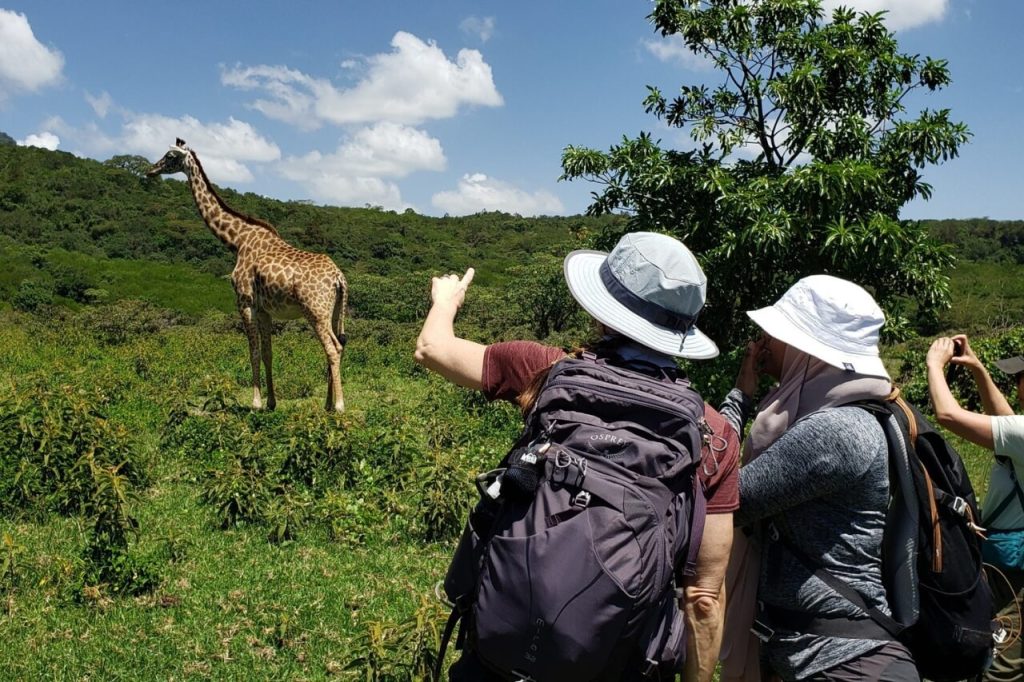
Every park has its own wildlife and character. However, the animals you see will depend on the destination, season, and conditions on the day.
Arusha National Park
Giraffes can often be seen in open areas. In addition, black-and-white colobus monkeys may also be seen in the trees.
Tarangire National Park
Tarangire is famous for elephants. You may also see giraffes, impalas, zebras, and many bird species while exploring the bush.
Lake Manyara National Park
Lake Manyara is known for its tree-climbing lions. In addition, the park also has many birds and a wide variety of other wildlife.
Nyerere National Park
Nyerere is known for wild dogs, hippos, crocodiles, elephants, and other wildlife. Furthermore, the Rufiji River adds another interesting part to the safari experience.
Mikumi National Park
Mikumi has open plains where zebra, giraffe, buffalo, elephant, and impala may be seen. As a result, it can offer varied wildlife viewing on foot.
Katavi National Park
Katavi is famous for large buffalo herds and huge numbers of hippos during the dry season. The park also supports lions, elephants, and other wildlife.
Gombe National Park
Chimpanzees are the main attraction in Gombe National Park. In addition, red colobus monkeys and olive baboons can also be seen along the forest trails.
Mahale Mountains National Park
Wild chimpanzees are the main attraction here. You may also see red colobus monkeys and many bird species while walking through the forest.
Saanane Island National Park
Saanane Island is home to zebra, impala, rock hyrax, and De Brazza’s monkeys. Because there are no large predators, the walking experience is more relaxed.
The bigger animals are not the only attraction. In addition, guides also look for spider webs, dung beetles, insects, plants, and fresh tracks. These small discoveries can therefore make a walking safari even more interesting.
How Hard a Walking Safari Really Is
Most walking safaris are suitable for reasonably fit adults. They are not usually serious hiking trips. Instead, the pace is slow, and guides make regular stops along the way.
The type of ground depends on the park. Some walks take place on flat grassland. Others, however, may include hills, rocky ground, or dry riverbeds.
Longer walking trips in places such as Nyerere National Park or Ruaha National Park may require more stamina. In comparison, shorter walks in Arusha National Park or Tarangire National Park are generally easier.
Guides can usually adjust the pace to suit the group. Therefore, if you have concerns about fitness, tell your safari operator before booking. They can then help you choose a suitable park and walking route.
How Safe a Walking Safari Really Is?
Walking safaris in Tanzania are led by trained guides and armed rangers. Together, they understand animal behavior and know how to move safely through the bush.
Before the walk begins, guests receive safety instructions. These usually cover how to walk, when to stay quiet, and what to do if an animal is nearby.
Following your guide’s instructions is the most important safety rule. Therefore, stay with the group and never approach wildlife on your own.
Wild animals can behave unpredictably. However, trained guides, armed rangers, and carefully planned routes help make walking safaris a well-managed activity.
How to Combine a Walking Safari and a Game Drive
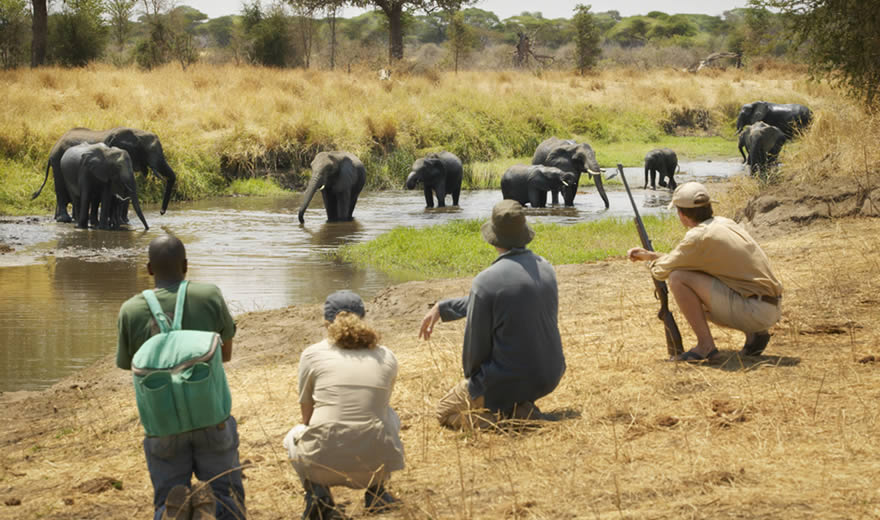
Most travelers add a walking safari to a larger Tanzania safari. This way, they get the chance to experience the bush in different ways.
Nyerere National Park and Ruaha National Park are good choices for combining walking with traditional game drives. For example, you can spend part of the day exploring on foot and another part looking for wildlife from a vehicle.
On a northern Tanzania safari, you can add a shorter walk in Arusha National Park or Tarangire National Park. This can provide a nice change after spending time on longer game drives in areas such as the Serengeti and Ngorongoro.
Walking safaris are offered by specific camps and operators. Therefore, not every property provides this activity. It is a good idea to check availability early, especially if walking is an important part of your safari.
What to Wear and Pack for a Walking Safari?
Sturdy, closed walking shoes are important. Shoes with good support are useful because the ground can be uneven. You may also walk over loose stones, grass, or dry riverbeds.
Long trousers and long-sleeved shirts can protect you from the sun, insects, and thorny plants. At the same time, choose comfortable clothing that allows you to walk easily.
Neutral and earth-toned colors are a good choice. In contrast, avoid very bright or white clothing, as these colors can stand out in the bush.
A wide-brimmed hat and sunglasses are useful during sunny walks. Also, sunscreen is important, especially when walking for several hours.
A small daypack can carry water, sunscreen, insect repellent, and your camera. In addition, binoculars are useful for watching birds and wildlife from a safe distance.
Frequently Asked Questions About Walking Safaris in Tanzania
Where can I go on a walking safari in Tanzania?
Walking safaris are available in selected national parks and conservation areas. Popular options include Arusha National Park, Tarangire National Park, Lake Manyara National Park, Nyerere National Park, Mikumi National Park, Katavi National Park, Gombe National Park, Mahale Mountains National Park, and Saanane Island National Park.
Is a walking safari in Tanzania safe?
Yes, walking safaris are conducted with trained guides and, where required, armed rangers. Before the walk, visitors receive safety instructions and must follow the guide’s directions throughout the experience.
How difficult is a walking safari in Tanzania?
The difficulty depends on the destination, terrain, distance, and walking conditions. Some walks are short and gentle, while others involve hills, rocky ground, or several hours of walking.
What is the best time for a walking safari in Tanzania?
The dry season from June to October is popular because trails are usually firmer and visibility can be better. However, the wetter months from November to May offer green landscapes and excellent birdwatching.
How long does a walking safari take?
A walking safari can last from about one hour to several hours, depending on the park and activity. Many guided walks last around two to four hours, while longer walking experiences may take more time.
What animals can I expect to see on a walking safari?
Wildlife varies by destination. Depending on the park, visitors may encounter elephants, giraffes, zebras, buffaloes, impalas, monkeys, birds, hippos, and other wildlife. Chimpanzee trekking in Gombe and Mahale offers a different experience focused on forest wildlife.
Can I combine a walking safari with a game drive?
Yes. Many travelers combine walking with traditional game drives. This allows visitors to explore the bush on foot while also covering larger areas by safari vehicle.
What should I wear for a walking safari in Tanzania?
Comfortable closed walking shoes, long trousers, and a long-sleeved shirt are recommended. A hat, sunglasses, sunscreen, insect repellent, and neutral-colored clothing can also make the walk more comfortable.
Do I need to be fit for a walking safari?
You do not usually need advanced fitness for a standard walking safari. However, a reasonable level of fitness helps, especially on longer walks or routes with hills and uneven ground.
Can children join a walking safari in Tanzania?
This depends on the park, walking route, operator, and the child’s age. Families should confirm the minimum age and safety requirements before booking a walking safari.
How much does a walking safari in Tanzania cost?
The price depends on the destination, length of the walk, accommodation, transport, park fees, and whether the walking experience forms part of a longer safari. Remote parks may also require additional flights or transfers.
Do I need a guide and armed ranger for a walking safari?
Walking safaris in Tanzania should be conducted with qualified guides and, depending on the destination and regulations, armed rangers. Their role is to help visitors move safely and understand the wildlife and environment.
Can beginners go on a walking safari in Tanzania?
Yes. Beginners can join many walking safari experiences because guides normally control the pace and explain what to expect. Shorter walks can also provide a good introduction to walking in the African bush.
What should I bring on a walking safari?
Useful items include drinking water, sunscreen, insect repellent, a hat, sunglasses, a small daypack, a camera, and binoculars. A light rain jacket can also be useful during wetter months.
Is a walking safari different from a normal Tanzania safari?
Yes. A game drive covers larger areas in a vehicle, while a walking safari focuses on experiencing the bush on foot. Walking allows more attention to tracks, plants, insects, birds, animal signs, and other smaller details.
Final Thoughts
A walking safari in Tanzania offers a more personal way to experience the African bush. Instead of simply looking for large animals from a vehicle, you can slow down and discover tracks, plants, birds, insects, and other signs of wildlife.
From the landscapes of Arusha and Tarangire to the remote wilderness of Nyerere and Katavi, different destinations offer different walking experiences. Gombe and Mahale also provide opportunities to explore forests while tracking wild chimpanzees.
If you are planning a Tanzania safari and want to add a walking experience, share your travel dates, interests, and preferred safari destinations. A suitable walking safari can then be included in your wider Tanzania itinerary.
