
Hiking Mount Meru in Tanzania means walking through a national park, past giraffe and buffalo, and up to a volcanic peak of about 4,565 metres. Mount Meru rises inside Arusha National Park in northern Tanzania, and it is the country’s second-highest mountain. As a result, it offers a real high-altitude adventure without the crowds of its famous neighbour.
Even better, this trek is packed with variety. In just a few days, you move from wildlife-filled forest to open moorland, then on to a sharp crater rim with views toward Mount Kilimanjaro. Meanwhile, the walk from Arusha is short, so getting started is easy.
So, whether you want a challenge or a warm-up for Kilimanjaro, this guide has you covered. Below, you’ll find the route, itinerary, difficulty, costs, wildlife, packing list, and safety tips, plus advice on combining the climb with a safari.
Mount Meru stands inside Arusha National Park, in the Arusha Region of northern Tanzania. The park sits just outside Arusha city, which makes the mountain one of the easiest big peaks to reach in the country. In fact, most travelers drive there in a short morning transfer.
Trekkers start at Momella Gate, the main entry point for the climb. From there, the mountain rises to the west, while Mount Kilimanjaro stands far to the east. Therefore, on clear days, the two giants face each other across the plains.
How High Is Mount Meru?
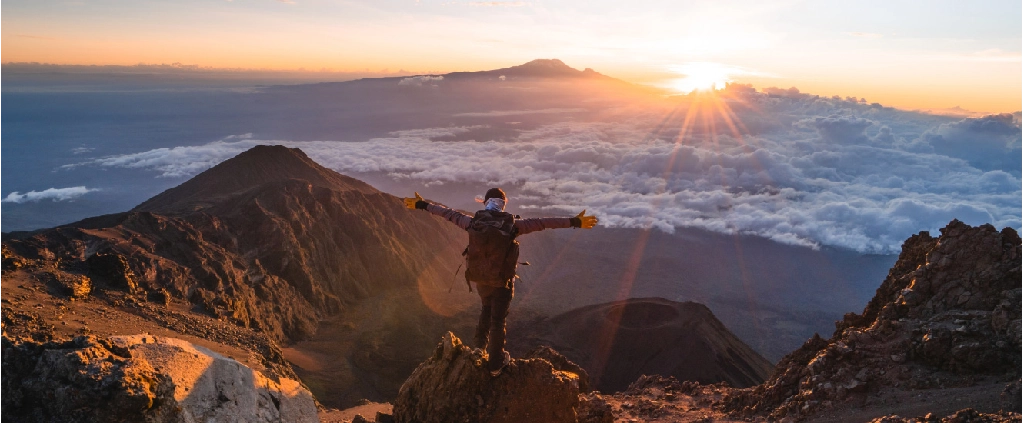
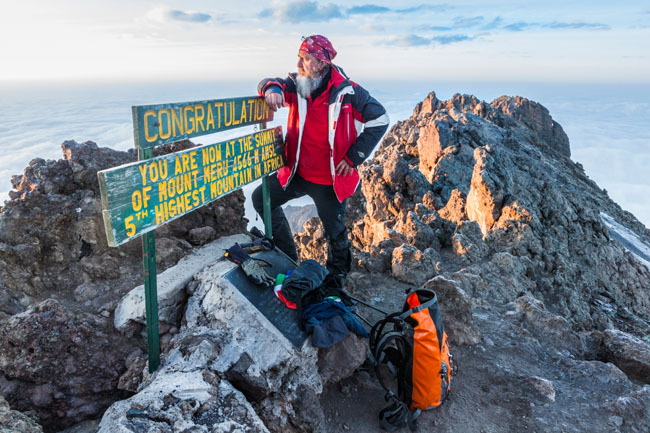
Mount Meru reaches about 4,565 metres, making it Tanzania’s second-highest mountain after Kilimanjaro. Its highest point is Socialist Peak, which sits on the jagged rim of an old volcanic crater. Because of this height, altitude matters on the trek, even for fit hikers.
The mountain is a volcano, and its shape tells that story clearly. A huge crater opens on one side, and a smaller Ash Cone rises inside it. In addition, the steep crater walls create some of the most dramatic scenery on any Tanzanian trek.
What Makes Mount Meru Special?
Mount Meru stands out because it combines wildlife, forest, and volcanic scenery in one trek. Unlike many mountains, you walk with an armed ranger, and animals often appear near the trail in the lower sections. As a result, the first day feels almost like a walking safari.
Furthermore, the crater views are striking, and the crowds are usually smaller than on Kilimanjaro. From the higher camps, you can also look across to Kilimanjaro rising above the clouds. For this reason, many trekkers call Meru the most underrated climb in Africa.
What Is the Mount Meru Hiking Route Like?
The standard trek follows one main route, known as the Momella Route. It runs from Momella Gate to Miriakamba Hut, then on to Saddle Hut, and finally up to Socialist Peak. Each stage feels different, so the walk never becomes repetitive.
First, you climb gently through forest. Next, the path steepens toward the huts, and finally the last section follows a narrow crater ridge. Because of this gradual build, the route suits well-prepared beginners as well as experienced hikers.
The Main Stops on the Mount Meru Trek
Momella Gate: This is the starting point, where you register, meet your ranger, and begin walking. From here, the trail enters lush forest, so expect birds and monkeys almost immediately.
1.Miriakamba Hut
This is the first overnight stop, set in a clearing above the forest. Afterward, hikers usually relax here, since the second day begins with a steeper climb.
2.Saddle Hut
Located higher up, this hut sits between Mount Meru and Little Meru. As a result, it is the launch point for the summit push, and the air here feels noticeably colder.
3.Little Meru
At roughly 3,800 metres, this is a popular acclimatization walk. Many groups climb it in the afternoon, then return to rest before the summit night.
4.Socialist Peak
This is the final goal, and the highest point of the trek. Finally, from here, the views stretch across the crater and out toward Kilimanjaro.
How Many Days Does It Take to Hike Mount Meru?
The full trek usually takes three to four days, but the walking time on each day is different. On day one, most hikers spend about four to five hours reaching Miriakamba Hut. Day two is a little longer, at roughly five to six hours to Saddle Hut, and the pace stays slow because of the altitude.
The summit day is the longest and hardest. Hikers usually walk for around ten to twelve hours in total, including the night climb, the summit stop, and the descent to Miriakamba Hut. Finally, the last day is a gentle walk of about three hours back to Momella Gate. These times are only estimates, since your group’s pace and the weather can change them.
Is It Difficult to Hike Mount Meru?
Yes, Mount Meru is difficult for many people, but it is achievable with the right preparation. Nothing on the route needs ropes or climbing skills, so the challenge comes from effort rather than technique. In particular, the steady uphill walking on day two and the cold summit night are what tire most hikers.
That said, several things make the trek easier. A slow pace, good boots, warm layers, and enough training all help a great deal. Moreover, the four-day itinerary gives your body more time to adjust, so many first-time trekkers find it much more comfortable than the three-day option.
Is It Safe to Hike Mount Meru?
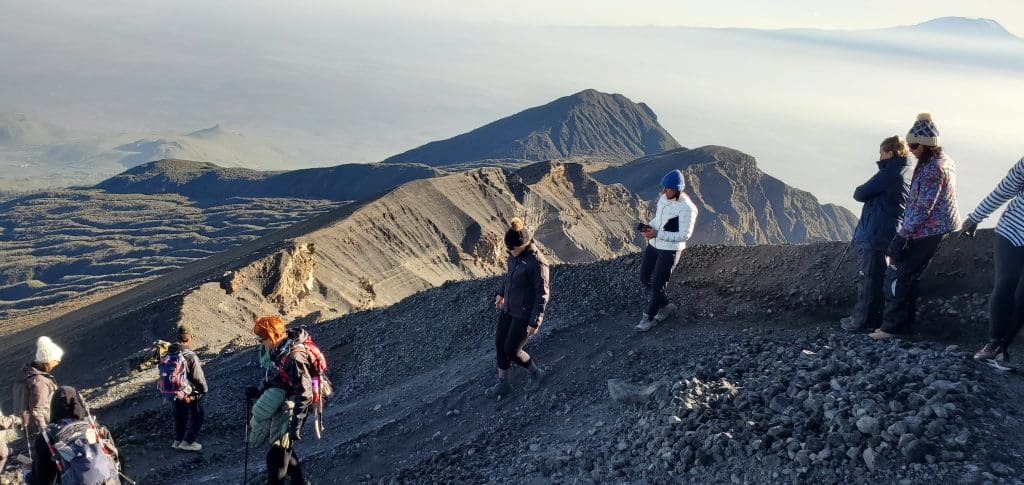
Hiking Mount Meru is generally safe when you go with a licensed local operator and follow your team’s advice. An armed park ranger walks with every group, mainly because buffalo and other wildlife live on the lower slopes. As a result, you are protected while you enjoy the wildlife, and you should never walk off the path alone.
Most Mount Meru treks take three to four days. The three-day option is shorter and cheaper, but it moves quickly and gives your body less time to adjust. Therefore, it suits strong, well-acclimatized hikers best.
By contrast, the four-day trek is the more comfortable choice, and it is the one most often recommended. The extra day allows a slower pace and better acclimatization, which improves your chances of reaching the summit. In short, four days is the safer and more enjoyable option for most people.
Mount Meru Hiking Itinerary
Day 1: Arusha to Momella Gate to Miriakamba Hut. After a morning transfer, you register at the gate and walk through forest and open glades. Along the way, wildlife such as buffalo and giraffe may appear, so your ranger stays alert. By afternoon, you reach Miriakamba Hut for dinner and rest.
Day 2: Miriakamba Hut to Saddle Hut. The path climbs steadily through montane forest and then out onto open moorland. Meanwhile, the views widen with every hour. Later, you arrive at Saddle Hut, where many hikers add a short acclimatization walk up Little Meru.
Day 3: Saddle Hut to Socialist Peak and back to Miriakamba Hut. The summit attempt begins around midnight or in the very early morning. You climb in the dark along the crater rim, then reach the peak around sunrise. Afterward, you descend to Saddle Hut for breakfast and continue down to Miriakamba Hut.
Day 4: Miriakamba Hut to Momella Gate. The last day is a gentle walk back through the forest. Finally, you return to the gate, collect your certificate, and drive back to Arusha.
How Difficult Is Hiking Mount Meru?
Hiking Mount Meru is challenging, but it is not technical. The main difficulties are altitude, steep sections, and long walking days. In addition, the summit night is cold, and the ridge is narrow and uneven, so focus matters.
Rather than one hard moment, the difficulty comes from several factors together. Day two involves a steady climb, while day three combines darkness, cold, and thin air. Still, with good fitness, a slow pace, and a positive attitude, most healthy hikers can succeed.
Wildlife You May See on Mount Meru
Because the trek starts inside a national park, wildlife is one of its biggest highlights. On the lower slopes, you may spot a wide range of animals and birds, especially in the early morning. In particular, the forest and open glades near Momella Gate are the best places to look.
Here are the animals you may see along the way:
- Buffalo
- Giraffe
- Antelope
- Baboons
- Colobus monkeys
- Blue monkeys
- Birds
That said, sightings are never guaranteed, since animals move freely. For safety, always follow your ranger’s instructions and keep a respectful distance. As a result, every encounter stays enjoyable for both you and the animals.
Vegetation and Landscapes Along the Route
The scenery changes quickly as you gain height, which keeps the trek interesting. First, you walk through lower forest with tall trees and hanging moss. Then, higher up, the montane forest gives way to open moorland and heath.
Above that, the landscape becomes rocky and volcanic, with sparse plants and bare ridges. Consequently, you experience several climate zones in just a few days, without leaving the same mountain.
What Can You See From Mount Meru?
From the higher sections, the views are excellent. You can see the huge crater, the Ash Cone, and the plains stretching toward Arusha. On clear mornings, Mount Kilimanjaro appears in the distance, often floating above a sea of cloud.
Above all, sunrise from the summit ridge is the highlight. The light spreads across the crater walls and the plains below, so it is well worth the cold early start.
The Mount Meru Summit Experience
The summit push begins in the middle of the night, when the air is cold and the stars are bright. You walk slowly by headlamp, following your guide along the rim. Although the terrain is steep and rocky in places, a steady pace makes it manageable.
Eventually, the sky lightens and Socialist Peak comes into view. Reaching the top around sunrise feels rewarding, especially with Kilimanjaro glowing in the distance. After a short rest and photos, you begin the descent, which is quicker but still needs care.
What Should You Pack for Mount Meru?
Packing well makes the trek far more comfortable. Bring layers, because temperatures swing from warm forest days to freezing summit nights.
- Broken-in hiking boots and good socks
- Warm jacket, waterproof jacket, and thermal layers
- Hiking trousers, gloves, and a warm hat
- Headlamp with spare batteries
- Sleeping bag, backpack, and water bottle
- Sunglasses, sunscreen, and insect repellent
- Snacks and any personal medication
- Trekking poles and a camera
When Is the Best Time to Hike Mount Meru?
The best time depends on what you want from the trek. In the dry months, from late June to October and again in December to February, trails are firmer and visibility is better. Therefore, these months suit most hikers.
In the rainy seasons, however, paths become slippery, clouds hide the views, and the summit feels colder. Even so, the forest turns green and the mountain is quieter. Whatever the month, mountain weather changes fast, so always pack rain gear.
How Much Does Mount Meru Hiking Cost?
The total price depends on several things: park fees, hut accommodation, guide and ranger fees, porters, food, transport, and the number of days. The tour operator you choose also affects the final cost. As a result, quotes can vary quite a lot.
Because fees change, always check the latest TANAPA tariff before budgeting. Also, ask your operator exactly what is included, so there are no surprises. In general, a four-day trek costs more than a three-day one, but it gives better acclimatization.
Do You Need a Guide to Hike Mount Meru?
Yes, you need to arrange the trek through a local tour operator, and you cannot hike alone. Your team usually includes a mountain guide, an armed park ranger, and porters. The ranger is there for safety, since wildlife lives along the lower trail.
Meanwhile, the guide handles navigation, pace, and health checks, and the porters carry the heavier gear. Together, they make the climb safer and let you focus on the walking and the views.
Altitude and Safety on Mount Meru
Altitude is the main safety concern, so a slow pace matters. Walk steadily, drink plenty of water, and rest when you need to. In addition, tell your guide early if you feel headache, nausea, or unusual tiredness.
Furthermore, always follow the instructions of your guide and ranger. They know the mountain and can decide when to slow down or turn back. This advice is general, so speak with a doctor before the trip if you have health concerns.
How to Prepare for Mount Meru Hiking
Physical preparation: Start training several weeks ahead with regular walking, hill hikes, and stair climbing. Add cardio and leg exercises to build strength. As a result, the long days on the mountain will feel far easier.
Mental preparation: Expect a few cold, tiring moments, especially on summit night. Patience and steady pacing help a lot. Above all, remember that reaching the top is a slow, step-by-step effort.
Where Do You Stay During the Mount Meru Trek?
Hikers sleep in mountain huts, namely Miriakamba Hut and Saddle Hut. The huts have shared bunk rooms, and meals are prepared by your crew. Because the huts are basic, bring a warm sleeping bag and your own toiletries.
In the evenings, hikers usually eat together and go to bed early. Since the summit push starts around midnight, good rest is important.
Hiking Mount Meru From Arusha
Arusha is the easiest base for this trek. Most trekkers stay a night in town, then take a transfer to Arusha National Park and Momella Gate. After the climb, the same vehicle returns you to Arusha.
Because the drive is short, the trek fits neatly into any northern Tanzania trip. Moreover, you can shower and rest in Arusha before your next adventure.
Combining Mount Meru With a Tanzania Safari
Mount Meru pairs well with a safari, since most northern parks are close by. You could hike first, then head to the Serengeti, Ngorongoro Crater, Tarangire, or Lake Manyara. Alternatively, many travelers use Meru as a warm-up before climbing Kilimanjaro.
This combination gives you both mountain and wildlife in one trip. As a result, a Meru trek followed by a safari is a popular way to see the best of northern Tanzania.
Frequently Asked Questions About Mount Meru Hiking
1. How high is Mount Meru in Tanzania?
It rises to about 4,565 metres and is Tanzania’s second-highest mountain.
2. How many days does it take to hike Mount Meru?
Most treks take three to four days, and four days is usually recommended for better acclimatization.
3. How difficult is Mount Meru hiking?
It is challenging but not technical, with the main difficulties being altitude, steep sections, and a cold summit night.
4. How much does it cost to hike Mount Meru?
The price depends on park fees, huts, crew, food, transport, and days, so check the latest TANAPA tariff and your operator’s quote.
5. Can beginners hike Mount Meru?
Yes, well-prepared beginners with good fitness can do it, especially on the four-day itinerary.
6. Do you need a guide to hike Mount Meru?
Yes, the trek must be arranged through a local operator and includes a guide and an armed ranger.
7. What wildlife can you see on Mount Meru?
You may see buffalo, giraffe, monkeys, baboons, antelope, and many birds, although sightings are never guaranteed.
8. What should I pack for Mount Meru?
Bring layers, hiking boots, a headlamp, a warm sleeping bag, rain gear, sun protection, and snacks.
9. Can you see Mount Kilimanjaro from Mount Meru?
Yes, on clear days Kilimanjaro is visible from the higher parts of the mountain, especially at sunrise.
10. What is the best time to hike Mount Meru?
The dry months, from late June to October and from December to February, usually give the best trail conditions and views.
Final Thoughts
Hiking Mount Meru in Tanzania offers a rare mix of wildlife, forest, volcanic scenery, and a rewarding summit. It is challenging enough to feel like a real achievement, yet close enough to Arusha to be easy to plan. For this reason, it works well as a stand-alone adventure or as part of a longer safari.
