
Meeting wild chimpanzees in their forest home is one of the most moving wildlife experiences in Africa. Chimpanzee trekking in Tanzania takes you on foot through thick rainforest, where expert guides follow tracks, feeding signs and calls until a chimp family comes into view. Unlike a game drive, you stand just a few metres from our closest living relatives as they feed, groom and play.
Tanzania offers chimpanzee trekking in only a few remote parks beside its great lakes. Gombe Stream National Park, made famous by Jane Goodall’s research, is small and full of history. Mahale Mountains National Park is larger and wilder, with one of Africa’s biggest wild chimp populations. Meanwhile, Rubondo Island National Park on Lake Victoria adds elephants, hippos and sitatunga antelope to the experience.
Your trek begins in the cool of the early morning, as our guides lead you along quiet forest trails until the calls of the chimps echo through the trees. Then comes the moment you will never forget: a precious hour watching a wild chimp family up close. With limited permits and remote parks, choosing the right park and the best time to go makes all the difference to your adventure.
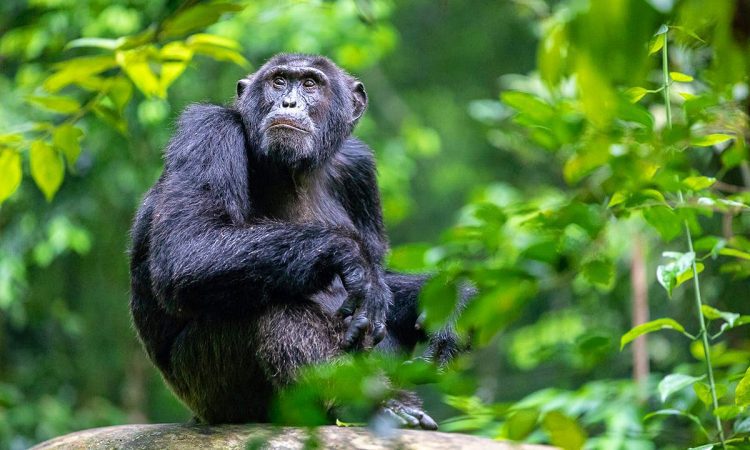
What Is Chimpanzee Trekking in Tanzania?
Chimpanzee trekking is a guided walk through the forest to find and watch a family of wild chimpanzees. The chimps are “habituated”, which means they have slowly grown used to people over many years of research, so they carry on with their normal lives while you watch.
Each trek is led by a trained guide and park ranger, and groups are kept small to protect the chimps. As a result, it feels like a quiet, personal visit rather than a busy tourist activity.
Where Is the Best Place to See Chimpanzees in Tanzania?
The best places for chimpanzee trekking in Tanzania are Gombe Stream, Mahale Mountains and Rubondo Island National Parks. Each one offers a very different setting, from small history-rich forests to wild mountain slopes and a peaceful island.
Gombe Stream National Park
Gombe is Tanzania’s smallest national park, yet it is world-famous as the place where Jane Goodall began studying chimpanzees in 1960. Around 90 to 100 chimps live here in well-known family groups, many of them descendants of the chimps she first studied.
The park sits on the shores of Lake Tanganyika, with steep forested valleys and small streams. Therefore, you enjoy a unique trek while learning about the longest-running chimpanzee research project in the world.
Mahale Mountains National Park
Mahale is much bigger and wilder, and it is home to one of the largest wild chimp populations in Africa. Treks climb through rainforest and bamboo, with Lake Tanganyika’s turquoise water shining below.
In addition, Mahale has no roads at all, so you explore only on foot or by boat. The mix of mountains, forest and white-sand beaches makes it one of the most beautiful and remote places in Tanzania.
Rubondo Island National Park
Rubondo is an island park in the southwest of Lake Victoria. Its chimps were brought here decades ago as part of a conservation project and now live wild in the forest, alongside elephants, hippos, sitatunga antelope and rich birdlife.
The chimps here are less used to people than in Gombe and Mahale, so sightings are less certain. However, Rubondo offers a peaceful island setting and a wider mix of wildlife in one place.
Which Chimpanzee Park Suits You Best?
- Gombe: best for a shorter trip, rich history and fairly easy access from Kigoma.
- Mahale: best for deep wilderness, large chimp groups and a true sense of adventure.
- Rubondo: best for a quiet island stay with chimps, elephants, hippos and birds.
You can also pair any of the three with a walking safari for even more time exploring on foot.
When Is the Best Time for Chimpanzee Trekking in Tanzania?
Chimpanzee trekking runs all year in Tanzania, but the dry season, from about May to October, is the most popular. Trails are firmer, the weather is drier and the walk is easier on your legs.
During the wet season, from about November to April, more fruit in the forest often draws chimps lower down, which can mean shorter treks, although paths get muddy and the air is humid. The long rains from March to May are the wettest months, when some lodges in Mahale close.
Neither season is wrong. Therefore, choose the dry months if easy walking matters most, or the wetter months if you want lush forest and a good chance of chimps nearby.
What a Typical Chimpanzee Trekking Day Looks Like
Your day starts early, right after breakfast. First, trackers head out to find the chimps, using their last known nesting spot, fresh tracks and calls to guess where they have moved.
Then your small group follows a guide into the forest. Some days the chimps are found within thirty minutes, while on others the trek takes several hours over steep, leafy trails.
Once the chimps are found, you usually have about one hour to watch them. You may see mothers caring for babies, adults grooming each other or young chimps playing in the trees, all while keeping your voice low.
Afterwards, the rest of the day is yours. Many guests relax by the lake, swim in the clear water, take a short forest walk or watch the birds.
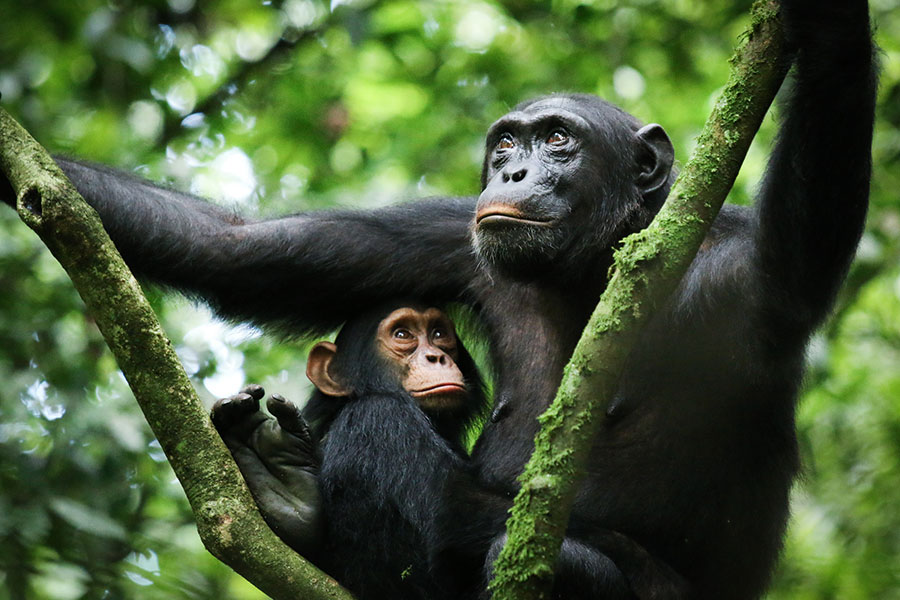
Chimpanzee Trekking Rules and Etiquette
Chimpanzees can catch human illnesses, so the parks follow strict rules to keep them healthy and wild. Your guide explains everything before the trek, but here are the main ones:
- Keep your distance: stay about 8 to 10 metres from the chimps at all times.
- Stay healthy: you cannot trek if you have a cold, flu or any illness.
- Wear a face mask: many parks ask visitors to wear one near the chimps.
- One hour only: viewing time with the chimps is limited to about an hour.
- No flash photography: and never eat, drink or smoke near the chimps.
- Keep quiet: speak softly and never try to touch or feed them.
- Minimum age: trekkers usually need to be at least 12 to 15 years old, depending on the park.
Following these rules helps protect the chimps and keeps this special experience possible for years to come.
What Other Wildlife Can Be Seen on a Chimpanzee Trek?
Chimpanzees are the stars, but the forests are full of other life too. In Gombe, you may spot olive baboons, red colobus, blue and red-tailed monkeys, while Mahale adds bushbuck and more than 300 bird species. Rubondo, meanwhile, is home to sitatunga antelope, elephants, hippos, crocodiles and African fish eagles.
Birdlife is excellent in all three parks, so keep looking up between chimp sightings. Many of these species face pressure from habitat loss, which makes protecting these forests even more important.
Things to Do Beyond Chimpanzee Trekking
After your trek, there is plenty more to enjoy in these beautiful lakeside parks.
Gombe Stream National Park
In Gombe, you can take forest walks to Jane Goodall’s old feeding station and the Kakombe Waterfall, watch birds and monkeys, or swim and snorkel in Lake Tanganyika. In the evening, the quiet beach is perfect for watching the sunset.
Mahale Mountains National Park
In Mahale, fit walkers can enjoy longer mountain hikes, while others relax with swimming, kayaking and snorkelling over colourful cichlid fish. Boat trips, fishing in permitted areas and stunning photography complete the experience.
What Makes Chimpanzee Trekking in Tanzania So Special?
Few experiences let you stand just a few metres from a wild chimpanzee family as it goes about its day. In addition, many chimps in Gombe and Mahale have been studied for decades, so guides often know each one by name, personality and family history.
The setting makes it even more magical. Both Gombe and Mahale sit on Lake Tanganyika, one of the longest, deepest and clearest lakes in the world, so a morning in the forest can end with an afternoon swim on a quiet beach.
Finally, it feels rare and earned. Permits are limited, the parks are remote and every step is on foot, so the whole day feels truly special. To learn more about the research that made Gombe famous, visit the Jane Goodall Institute.
How Difficult Is Chimpanzee Trekking in Tanzania?
The difficulty depends on where the chimps slept the night before, which no one can predict. Some days bring a short, gentle walk of under an hour, while others mean several hours on steep, humid forest trails.
In general, Mahale’s trails are higher and steeper than Gombe’s, while Rubondo’s flatter island paths suit almost anyone. A normal level of fitness makes any trek much more enjoyable.
Guides keep a slow, steady pace with plenty of rest stops, and porters can carry your daypack on longer routes. If you have any fitness concerns, let us know early, and we will help you choose the right park.
How to Get to Gombe, Mahale and Rubondo
All three parks are remote and have no roads inside, so getting there usually means a flight followed by a boat ride. This remoteness is part of what makes them feel so wild and untouched.
For Gombe, you fly to Kigoma and then take a boat north along Lake Tanganyika for about one to two hours. For Mahale, a small plane takes you to the Mahale airstrip, usually via Katavi, followed by a boat ride of about ninety minutes. Rubondo can be reached by flying to the island’s airstrip, or by road from the Mwanza area and then a boat across Lake Victoria.
Flights to the west run only on certain days, so it is wise to plan your connections early and allow plenty of time between legs.
How to Combine Chimpanzee Trekking With a Safari
Because of the long transfers, most travellers combine chimpanzee trekking with a wider Tanzania safari. A popular choice is game drives in the Serengeti and the Ngorongoro Crater, followed by a flight west to Gombe or Mahale.
For a wilder trip, you can pair Katavi’s buffalo herds and hippo pools with Mahale’s chimps, or combine the Serengeti’s Western Corridor with Rubondo Island. Many guests also finish with a few relaxing days on Zanzibar.
As a guide, three to four nights near the chimps gives you more than one chance to trek, while the full trip with a safari usually runs from eight to twelve days.
What to Pack for Chimpanzee Trekking
The right gear makes a forest trek much more comfortable. Here is what to bring:
- Hiking shoes or boots with good grip for steep, muddy trails.
- Long trousers and a light long-sleeved shirt to protect against insects and plants.
- A waterproof jacket, as rain can fall at any time in the forest.
- Garden or light gloves for grabbing branches on steep slopes.
- A small daypack with drinking water and snacks.
- Insect repellent and a face mask.
- Binoculars and a camera without flash.
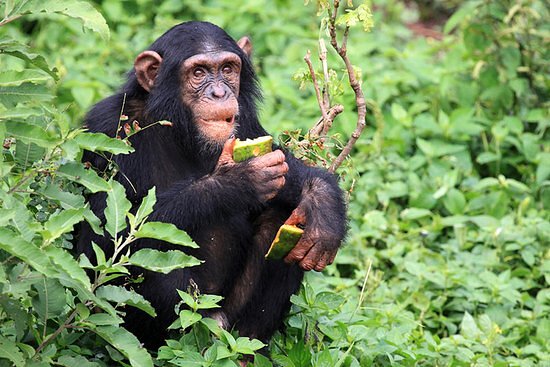
Why Choose See Endless Adventures for Chimpanzee Trekking?
At See Endless Adventures, we are a local, Tanzania-based team, and we know how to plan these remote trips smoothly. We handle the tricky parts, so you can simply enjoy the chimps.
- Permits arranged for you: we book your chimpanzee trekking permits in advance.
- Smooth connections: we plan your flights and boat transfers around the limited schedules.
- The right park for you: we match Gombe, Mahale or Rubondo to your fitness, time and budget.
- Safari and chimps in one trip: we combine your trek with classic game drives or a beach stay.
- Support at every step: our team is available 24/7 while you are in Tanzania.
Our guests rate us “Excellent” on Tripadvisor, and we would love to help you plan your own chimpanzee adventure.
Frequently Asked Questions About Chimpanzee Trekking in Tanzania
Where can chimpanzee trekking be done in Tanzania?
Chimpanzee trekking is available in Gombe Stream, Mahale Mountains and Rubondo Island National Parks. Gombe and Mahale sit on Lake Tanganyika, while Rubondo is an island in Lake Victoria.
When is the best time for chimpanzee trekking in Tanzania?
Trekking runs all year. The dry season, from May to October, offers firmer trails, while the wetter months can bring chimps lower down when fruit is plentiful.
How long does a chimpanzee trek take?
A trek can take from about thirty minutes to several hours, depending on where the chimps are. Once you find them, you usually spend about an hour watching.
How close can visitors get to wild chimpanzees?
Visitors usually stay about 8 to 10 metres away, following park rules. Sometimes the chimps walk closer on their own, but you should never approach them.
Is chimpanzee trekking suitable for first-time safari travellers?
Yes. Experienced guides and rangers lead every trek, so first-timers enjoy it too. Just choose a park that matches your fitness level.
How difficult is chimpanzee trekking?
It varies by park and by day. Some walks are short and gentle, while others climb steep, humid trails, so a reasonable level of fitness helps.
How much does chimpanzee trekking in Tanzania cost?
The cost depends on the park, permits, accommodation, flights, boat transfers and trip length. Remote parks like Mahale need extra flights, so we tailor every quote to your plans.
Is a permit needed for chimpanzee trekking?
Yes. Every trekker needs a permit, and numbers may be limited each day. We arrange the permits for you before your trip.
Can children go chimpanzee trekking?
Most parks set a minimum age of about 12 to 15 years to protect both children and chimps. Always check the current age rule before booking.
What should be packed for chimpanzee trekking?
Bring hiking shoes, long trousers, a light long-sleeved shirt, a rain jacket, gloves, water, insect repellent, a face mask and binoculars.
Can chimpanzee trekking be combined with a safari?
Yes. Most travellers combine it with the Serengeti, the Ngorongoro Crater, Katavi or a Zanzibar beach stay for a complete Tanzania adventure.
