
The great wildebeest migration in Tanzania is the largest movement of land animals on Earth. Over a million wildebeest, plus hundreds of thousands of zebra and gazelle, walk in a giant circle through the Serengeti national park each year. They chase fresh grass and water as the seasons change.
This journey never really stops. It moves in a clockwise loop that covers the whole Serengeti ecosystem, from the short grass plains in the south to the Mara River in the north. Rain decides the exact route, so no two years look exactly the same.
This guide keeps things simple. It explains what the migration is, where to find it each month, the best time to visit, the animals you can expect, and what to pack. By the end, you should know exactly when and where to plan your trip.
What Is the Great Migration?
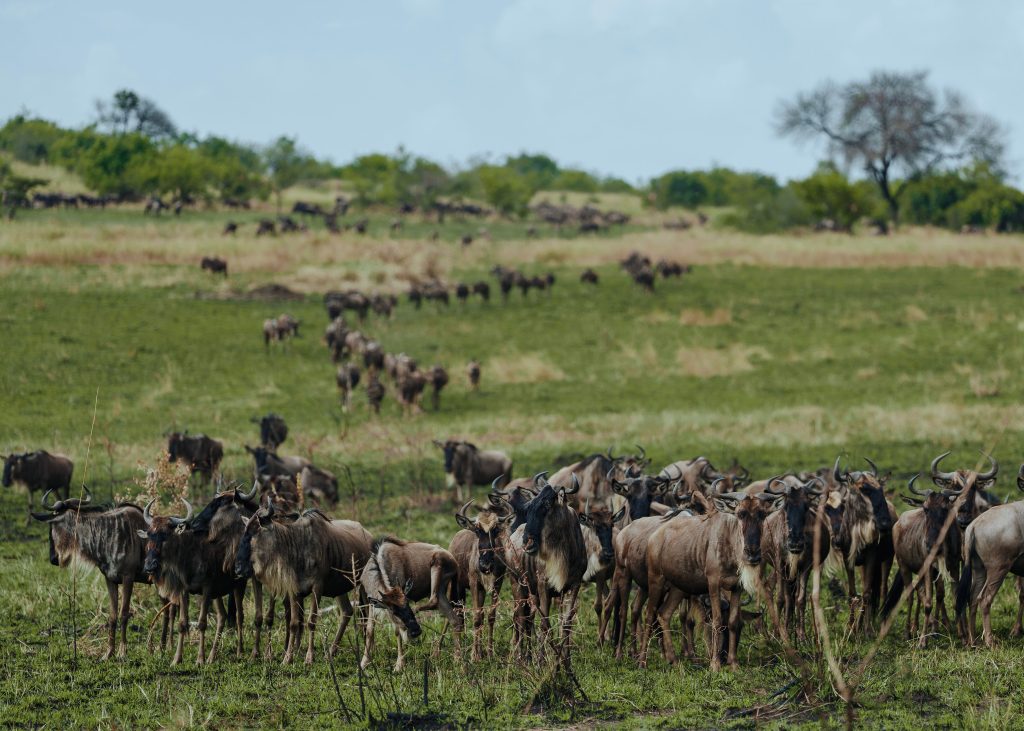
The great migration is the yearly movement of over a million wildebeest across the Serengeti in search of grass and water. Zebra and gazelle travel alongside them for safety in numbers. Together, they form one of nature’s biggest wildlife events.
The herds do not follow a fixed route each year. Instead, rainfall pulls them toward whichever area has fresh grass. This makes the migration a living, moving cycle rather than a single event on a set date.
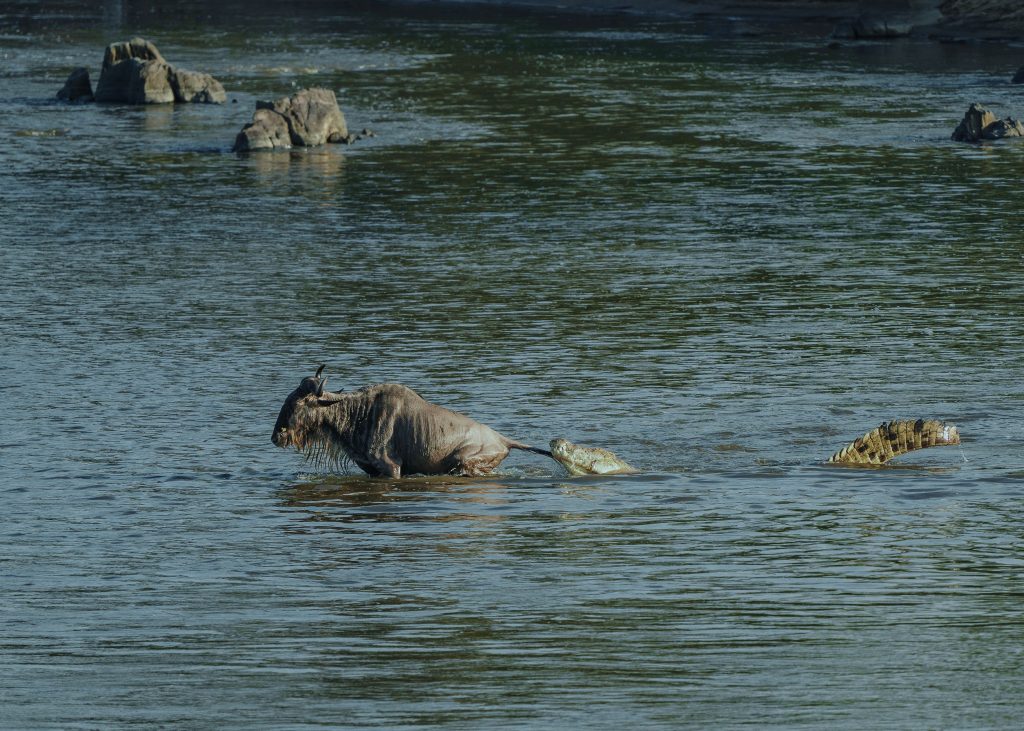
Predators follow the herds the whole way. Lions, cheetahs, hyenas, and crocodiles all time their year around the migration’s movement. This constant chase is part of what makes the spectacle so dramatic to watch.
Where the Great Migration Takes Place
The migration takes place across the Serengeti ecosystem in Tanzania and the Maasai Mara in Kenya. Most of the yearly loop, however, happens inside Tanzania. Tanzania National Parks (TANAPA) manages the Serengeti side of this shared landscape.
The route runs south to north and back again each year. It starts on the short grass plains near Ndutu, moves through central and western Serengeti, then reaches the Mara River in the far north. From there, the herds turn south once more.
Because the loop is so large, no single spot shows the whole migration at once. Choosing the right region for your travel dates matters more than picking a single “best” park.
When the Great Migration Happens in Tanzania?
The great migration runs all year, since the herds never fully stop moving. That said, certain months bring bigger, more dramatic action than others. Two windows stand out above the rest.
Calving season peaks from late January through March in the southern plains.
River crossings then take over from around June through October in the west and north. Between these two peaks, the herds are simply on the move.
Because rainfall shifts every year, exact dates can change by a few weeks. A guide who tracks herd movement closely can help you time a trip around the right region rather than a fixed date.
Great Migration Calendar: Month-by-Month
Here is a simple month-by-month breakdown of where the herds usually are. Remember that rainfall can shift these dates slightly from year to year.
January to March – Calving Season
The herds gather on the short grass plains around Ndutu and the southern Serengeti. Roughly 8,000 calves are born each day at the peak in February. Predators stay close, making this one of the best windows for big-cat sightings.
April to May – Movement Through the Serengeti
As the short rains ease, the herds start moving north. Long grass in central Serengeti pulls large columns of wildebeest across open plains. This period also marks the start of the mating season.
June to July – Western and Northern Serengeti
The herds push through the Western Corridor and cross the Grumeti River, where large crocodiles wait. Survivors keep heading north toward the Mara region. Grass and water levels shape the exact pace each year.
August to October – Mara River Area
This is the season most travelers picture when they think of the migration. Huge herds gather at the Mara River and cross in dramatic bursts. Crossings can happen several times a week during peak months.
November to December – Return to Southern Serengeti
Short rains begin, and the herds turn south again. They cross the eastern and central Serengeti on their way back toward Ndutu. By December, they are close to where the yearly cycle begins once more.
Best Places to See the Great Migration in Tanzania
Because the herds move all year, different parts of the Serengeti suit different months. Below are the four main areas travelers use to follow the migration.
Ndutu
Ndutu sits on the southern edge of the Serengeti, next to the Ngorongoro Conservation Area. It hosts the calving season from around January to March. Open plains and short grass make sightings easy here.
Central Serengeti
Central Serengeti, also called Seronera, holds wildlife all year round. It works well in April and May as herds pass through on their way north. Resident lions and leopards also live in this area.
Western Serengeti
The Western Serengeti, including the Grumeti Reserves, sees the migration around June and July. The Grumeti River crossing here draws large crocodiles. It offers a quieter, less crowded alternative to the Mara.
Northern Serengeti
Northern Serengeti borders the Maasai Mara and hosts the famous Mara River crossings. Herds pass through from roughly July to October. This region delivers the migration’s most dramatic scenes.
Best Time to Experience the Great Migration
The best time really depends on what you want to see. Calving season from January to March offers newborn calves and heavy predator action. River crossings from July to September bring the most dramatic scenes of the year.
Shoulder months like April, May, and November also have their own appeal. Crowds are smaller, rates often drop, and the herds are still on the move somewhere in the ecosystem. Green scenery adds to the experience during these quieter months.
There is no single wrong month to visit, since some part of the migration is always happening. Picking a season simply means deciding which chapter of the story you want to witness. Check our guide to the best time to visit Tanzania for more detail.
When Is the Wildebeest Calving Season?
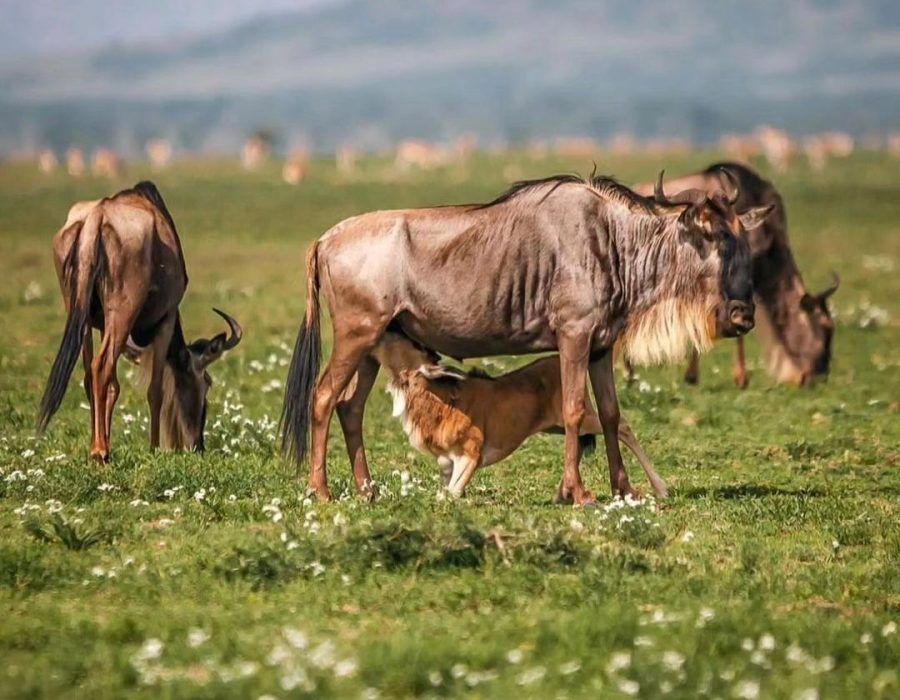
Calving season runs from around late January through March. It centers on the short grass plains near Ndutu and the southern Serengeti. Around 8,000 calves can be born on a single day at its February peak.
Newborn calves stand and walk within minutes of birth, but they remain easy targets for predators. This draws large numbers of lions, cheetahs, and hyenas into the same area. Sightings of hunts and chases become common during this period.
Because the action stays fairly local, camps near Ndutu offer strong access during these months. Green, open scenery also makes for excellent photography at this time of year.
When the Wildebeest Cross the Mara River?
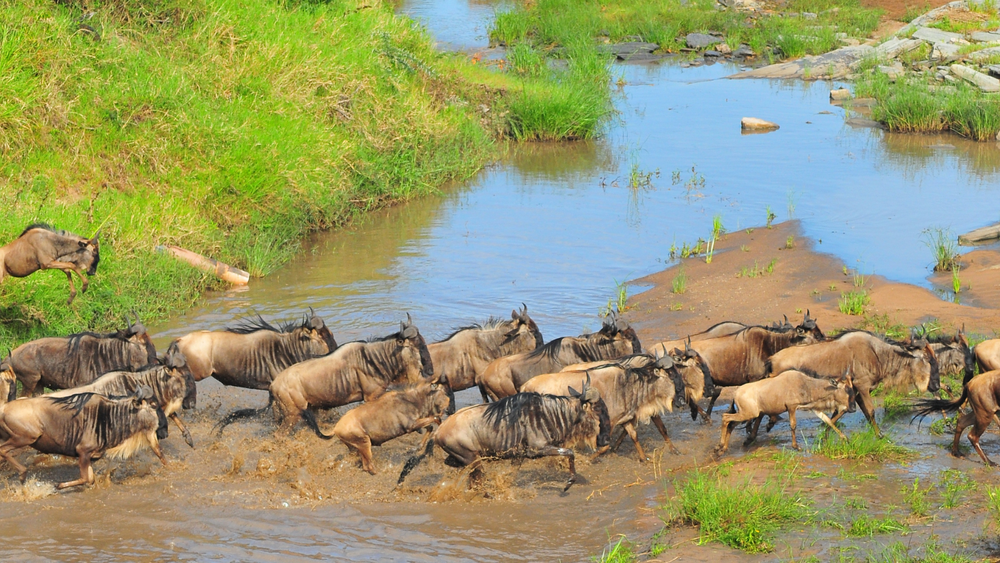
Mara River crossings usually happen from around July through September, sometimes stretching into October. Timing depends heavily on rainfall in the north. Herds gather on the riverbank before pushing across in sudden bursts.
Crossings are unpredictable from day to day, since herds may wait for hours before committing. Guides watch herd behavior closely to judge when a crossing looks likely. Patience is often part of the experience.
Staying several nights in the northern Serengeti or nearby raises your chances of seeing a crossing. A single day visit rarely guarantees this dramatic moment.
Animals You Can See During the Great Migration
Wildebeest form the heart of the migration, with well over a million animals on the move. Zebra travel alongside them in large numbers, often leading the herd toward fresh grazing. Thomson’s and Grant’s gazelles join the same journey in smaller groups.
Predators follow closely behind the herds all year. Expect to see:
- Lions
- Cheetahs
- Spotted hyenas
- Nile crocodiles
- Leopards
Crocodiles wait in rivers like the Grumeti and the Mara, where crossings offer an easy meal. The IUCN Red List tracks the conservation status of many of these species, since habitat and climate pressures affect the wider ecosystem.
How Long a Great Migration Safari Should Be?
A trip of five to seven days gives enough time to follow the migration properly. This allows for travel between regions and a few spare days in case the herds shift location. Shorter trips can work but leave less room for flexibility.
If river crossings are your main goal, plan at least three nights in the northern Serengeti alone. Crossings do not happen on command, so extra time raises your odds of witnessing one. Rushing through in a single day often leads to disappointment.
Combining the migration with other parks, such as Ngorongoro Crater or Tarangire, works well for a longer two-week itinerary. This spreads out travel and adds variety beyond the migration itself.
Where to Stay During the Great Migration?
Accommodation options range from simple tented camps to luxury lodges, spread across each migration region. Many camps in Ndutu and the Serengeti move seasonally, following the herds as they shift location. This keeps wildlife close to camp for most of the year.
Mobile camps offer the biggest advantage during migration season, since they relocate based on where the herds currently are. Permanent lodges in central and northern Serengeti also work well, especially for longer stays in one place.
Because migration season draws heavy demand, especially from July to March, booking well ahead matters. Popular camps near river crossing points can fill up months in advance.
How Much a Great Migration Safari Costs?
Costs vary widely based on season, camp style, and trip length. Budget group safaris can start from a few hundred dollars per person per day, while luxury mobile camps during peak crossing season can run into four figures per night.
Peak months, especially August through October and February, carry the highest rates due to demand. Shoulder months like April, May, and November often offer lower prices with fewer crowds. This makes them a good option for budget-conscious travelers.
Great Migration Safari Tips for First-Time Visitors
Book your trip well ahead of time, especially for peak months like February and August through October. Camps near popular crossing points fill up early, so early planning secures the best locations.
Stay flexible with your itinerary if possible, since herd movement can shift with the rain. A guide who tracks daily reports can adjust your route to follow the action rather than a fixed plan.
Finally, set realistic expectations around river crossings. They are dramatic but never guaranteed on a single day, so patience and extra time in the region improve your chances the most.
Frequently Asked Questions About the Great Wildebeest Migration
What is the best month to see the Great Wildebeest Migration in Tanzania?
The best month depends on the part of the migration you want to experience. January to March is ideal for calving and predator action, while July to September is a popular period for following the herds in the Northern Serengeti and possible Mara River crossings.
Where is the Great Migration in Tanzania right now?
The location of the herds changes throughout the year. They move between southern, central, western, and northern Serengeti as they follow rainfall, fresh grass, and water. Our guides use current wildlife reports to plan the route around the expected herd location.
How many wildebeest are in the Great Migration?
The migration involves more than one million wildebeest, together with hundreds of thousands of zebras and gazelles. These animals move through the Serengeti-Mara ecosystem as part of the annual migration cycle.
Is the Great Migration worth seeing without a river crossing?
Yes. River crossings are only one part of the migration. Calving, large herds moving across the plains, predator activity, and the seasonal movement of animals all create memorable safari experiences.
How many days do I need for the Great Wildebeest Migration?
Five to seven days gives travelers more time to follow the migration and move between different areas. If river crossings are the main goal, spending at least three nights in the Northern Serengeti provides more time to wait for the right conditions.
How much does a Great Migration safari cost in Tanzania?
The cost depends on the travel season, accommodation, safari length, transport, and type of camp. Peak migration periods usually cost more, while shoulder-season travel can offer different accommodation options and lower rates.
Should I book a Great Migration safari in advance?
Yes, especially if you plan to travel during February or between July and October. Camps in popular migration areas can fill early, so booking ahead gives you more accommodation and itinerary options.
Which part of the Serengeti is best for the Great Migration?
The right area depends on the month. Ndutu and the southern Serengeti are important during calving season, the Western Serengeti becomes relevant around the Grumeti movement, and the Northern Serengeti is important during the Mara River crossing period.
Can I see the Great Migration and the Big Five on the same safari?
Yes. The Serengeti supports lions, leopards, elephants, buffaloes, and rhinoceros alongside the migrating herds. Adding Ngorongoro Crater to the itinerary can also provide another strong wildlife-viewing environment.
Can I combine the Great Migration with Ngorongoro Crater?
Yes. Serengeti and Ngorongoro Crater work well together on a Northern Tanzania safari. You can follow the migration in Serengeti and then continue to Ngorongoro for a different wildlife and landscape experience.
Is the Great Migration suitable for a first-time safari in Tanzania?
Yes. The migration can form part of a first Tanzania safari, especially when the itinerary also includes destinations such as Ngorongoro Crater or Tarangire. A guide can help organize the route around the season and your interests.
What should I pack for a Great Migration safari?
Pack comfortable neutral-colored clothing, a warm layer for early mornings, comfortable shoes, sunscreen, sunglasses, a hat, insect repellent, and a camera. Binoculars are also useful for watching wildlife from a safe distance.
Final Thoughts
The Great Wildebeest Migration is not a single event that happens on one particular day. It is a continuous natural cycle that changes location throughout the year. The experience you get depends heavily on when you travel and which part of the Serengeti you visit.
If you want to see newborn wildebeest and intense predator activity, plan around the January to March calving season. If your dream is to watch huge herds gather around the Mara River, plan for the Northern Serengeti during the migration season. For a broader safari, you can combine the migration with Ngorongoro Crater, Tarangire, or the Big Five.
At See Endless Adventures, we plan migration safaris around the season and the expected movement of the herds rather than treating the Serengeti as one fixed destination. Tell us your travel dates, budget, and preferred experience, and our team can help you build a Great Migration itinerary around the right region and time of year.Frequently Asked Questions About the Great Wildebeest Migration
