
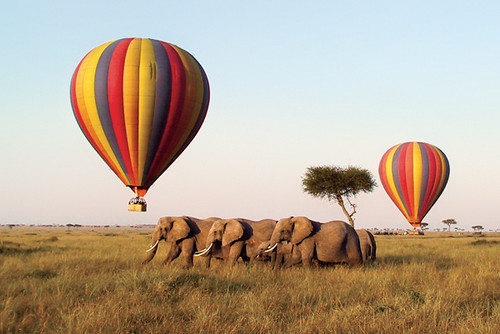
A Tanzania Hot Air Balloon Safari offers a different way to experience Tanzania’s famous wildlife and landscapes. At sunrise, the balloon rises quietly above the plains, giving a wide view of animals, rivers, forests, and the changing colours of the African landscape.
The Serengeti National Park is the main destination for balloon safaris in Tanzania, with flights operating from different areas depending on the season. Tarangire National Park also offers balloon flights, giving travelers views of elephants, baobabs, and the park’s river valleys from above.
At See Endless Adventures, we add a balloon safari to selected Tanzania safari itineraries for travelers who want more than a traditional game drive. It fits especially well with a Great Wildebeest Migration, Big Five, or Ngorongoro Crater safari, creating a wider Northern Tanzania experience.
What Is a Tanzania Hot Air Balloon Safari?
A hot air balloon safari is a sunrise flight over a protected wildlife area. Instead of travelling along the ground in a safari vehicle, the balloon moves with the wind above the landscape.
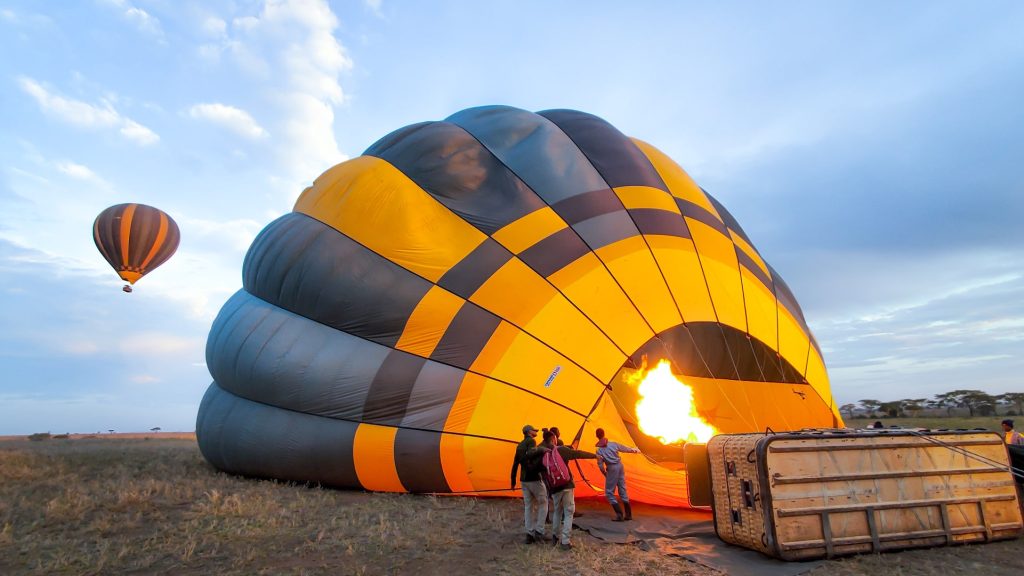
The experience usually begins before sunrise. After a transfer to the launch area and a safety briefing, the balloon is inflated and prepared for take-off. The flight lasts around one hour, although the complete experience takes longer because it includes transfers, preparation, landing, and breakfast.
From the basket, the main attraction is the landscape itself. The quiet flight gives a broad view of plains, rivers, woodland, kopjes, and wildlife moving below.
Where Are Hot Air Balloon Safaris Available in Tanzania?
Tanzania has several areas associated with hot-air-balloon experiences, but Serengeti and Tarangire are the key destinations for travelers planning a safari. Serengeti has established balloon operations across different parts of the park, while Tarangire offers a very different landscape dominated by baobabs, river valleys, and elephants.
Serengeti National Park
The Serengeti is the most famous place for a balloon safari in Tanzania. Its huge open plains make the aerial experience especially impressive.
Flights operate from different areas according to season and wildlife movement. These include the central Serengeti around Seronera, southern areas such as Ndutu, the Western Corridor, and northern Serengeti during certain periods.
This makes the activity particularly useful for travelers following the Great Wildebeest Migration. The exact launch location depends on the season and operating conditions.
Tarangire National Park
Tarangire National Park provides a different balloon experience. Instead of endless open plains, the landscape includes large baobab trees, woodland, the Tarangire River, and important elephant habitats.
Balloon operators currently list Tarangire as a destination for sunrise flights.
At See Endless Adventures, Tarangire also works well as part of a Northern Circuit safari before continuing towards Ngorongoro Crater and Serengeti.
Why Is Serengeti Popular for a Balloon Safari?
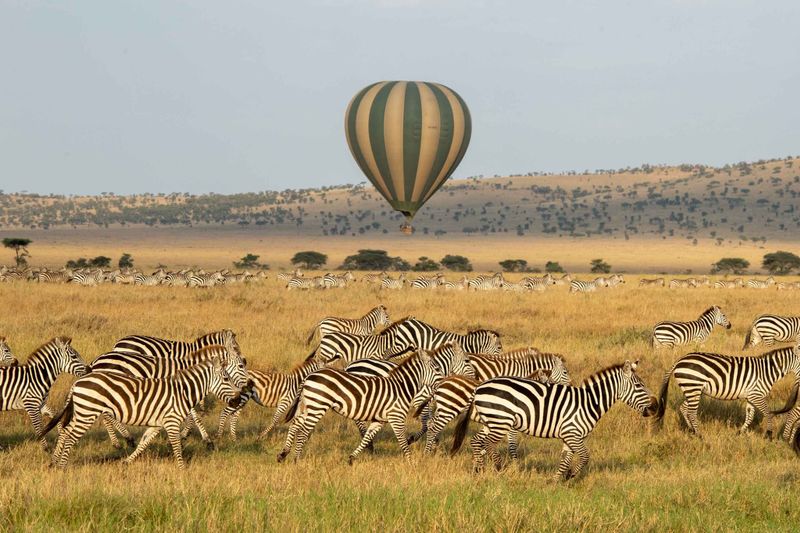
The Serengeti is especially suited to ballooning because its wide plains allow travelers to appreciate the scale of the ecosystem from above. TANAPA describes the park as home to more than 1.5 million wildebeest, zebras and other animals involved in the Great Migration, as well as the Big Five.
From the air, the experience is less about getting close to one particular animal and more about seeing the relationship between wildlife and the landscape. Herds, rivers, woodland, kopjes, and safari vehicles become part of one wide view.
Therefore, a balloon flight works well alongside a normal game drive. The game drive provides close wildlife viewing, while the balloon adds a completely different perspective.
When Is the Best Time for a Tanzania Hot Air Balloon Safari?
The best time depends on the destination and the experience planned. For Serengeti, the dry season from June to October is popular because the weather is generally suitable for safari activities and wildlife viewing is strong. January and February also offer an interesting combination of wildlife and the calving season in southern Serengeti. TANAPA identifies January–February as an important calving period.
For travelers interested in the Great Wildebeest Migration, the balloon location should match the expected movement of the herds. Seasonal launch areas in southern, western, central, and northern Serengeti help operators position flights according to the time of year.
Weather still matters. Balloon flights depend on suitable flying conditions, so the pilot makes the final decision on whether a flight can safely operate.
What Happens During a Hot Air Balloon Safari?
A Tanzania balloon safari starts very early in the morning. The exact schedule depends on the camp location and launch site, but the main stages remain similar.
Early Morning Transfer
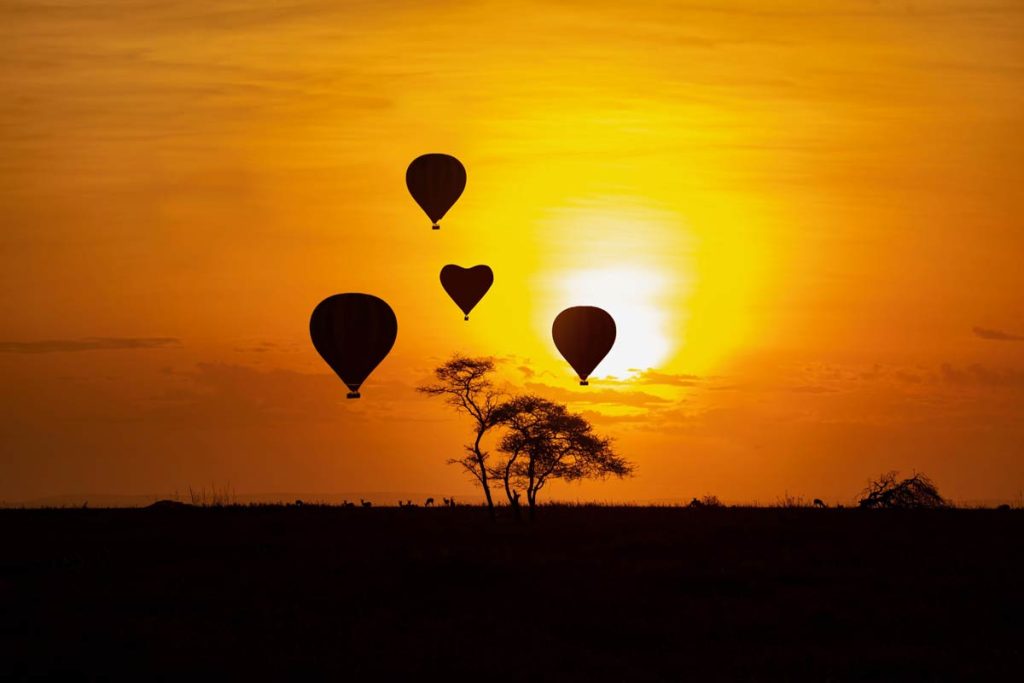
The safari begins before sunrise with a transfer from the camp or lodge to the launch area. The early start allows the balloon to rise around sunrise.
Balloon Inflation and Safety Briefing
At the launch site, the crew prepares and inflates the balloon. The pilot then explains the basic safety procedures and boarding instructions.
Sunrise Balloon Flight
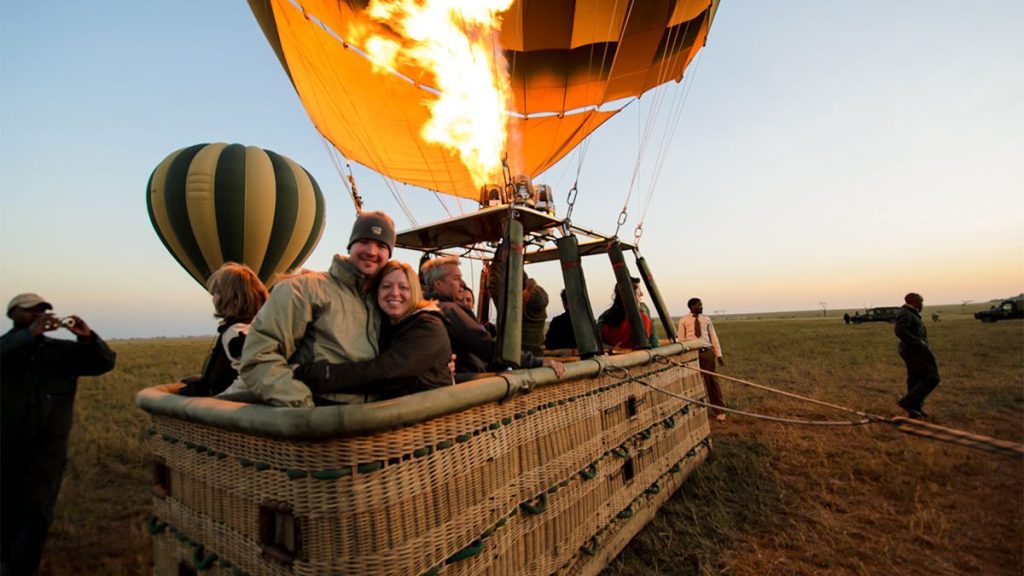
Once airborne, the balloon moves quietly above the landscape. The flight usually lasts about one hour.
Landing and Bush Breakfast
After landing, the experience normally continues with a bush breakfast. Depending on the operator, this may include a traditional balloon celebration and other services.
What Animals Can Be Seen From a Balloon Safari?
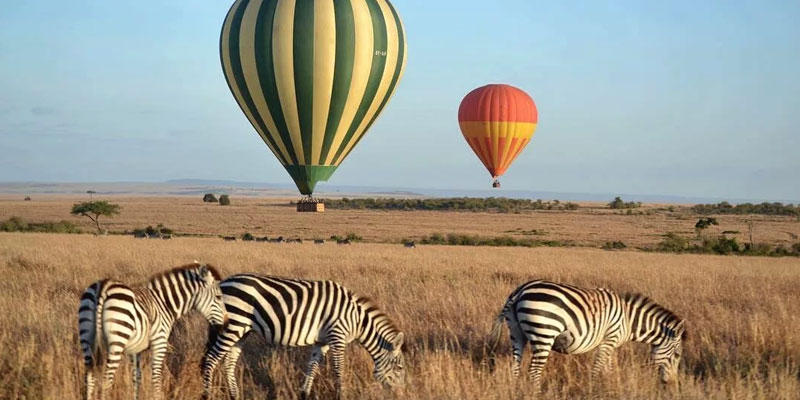
A balloon safari offers the possibility of seeing wildlife from above, but it is not designed for close-up animal viewing. The balloon follows the wind, so the pilot cannot simply steer directly towards a particular animal.
In the Serengeti, the landscape may reveal wildebeest, zebra, giraffe, elephants, buffaloes, hippos, and other wildlife depending on the area and season.
For close wildlife encounters, our guides combine the balloon experience with game drives. This is especially useful for travelers interested in the Big Five, including lions, elephants, buffaloes, leopards, and rhinos.
How Does a Balloon Safari Connect With the Great Wildebeest Migration?
A balloon safari adds an aerial perspective to the Great Wildebeest Migration. During the migration, huge herds move through different parts of the Serengeti ecosystem in response to rainfall, fresh grass, and water.
The experience changes according to the season. Southern Serengeti and Ndutu are important during the calving period, while western and northern areas become important during later stages of the migration.
At See Endless Adventures, a balloon flight can be added to a migration itinerary where the flight location matches the safari route and operating season.
Planning a migration safari? A balloon flight can be added to a relevant Great Wildebeest Migration itinerary to combine game drives with a sunrise experience from above.
Can a Balloon Safari Be Combined With Ngorongoro Crater?
Yes. A balloon safari works well as part of a wider Northern Tanzania itinerary that includes Serengeti and Ngorongoro Crater.
The two experiences are very different. Serengeti offers wide plains, large wildlife movements, and the Great Migration, while Ngorongoro provides a compact wildlife environment inside a volcanic caldera.
Our existing Ngorongoro Crater content explains the wildlife, crater floor, Big Five, and surrounding Conservation Area in more detail. Adding both destinations creates a safari with different landscapes and wildlife experiences rather than repeating the same activity.
How Much Does a Tanzania Hot Air Balloon Safari Cost?
The price depends on the destination, operator, season, and what the package includes. Current published operator rates provide a useful guide, but prices change over time.
For example, Serengeti Balloon Safaris currently lists US$599 per person for Serengeti and US$550 for Tarangire, with a published price increase scheduled for January 2027.
At See Endless Adventures, we recommend confirming the balloon supplement when planning the full safari because accommodation, park fees, transport, and the balloon experience may be priced separately depending on the itinerary.
Is a Hot Air Balloon Safari Safe?
Safety is a major part of every balloon operation. Flights use professional pilots, trained ground crews, safety equipment, and controlled boarding and landing procedures.
The pilot checks the conditions before take-off. If the weather is unsuitable, the flight may be cancelled or rescheduled according to the operator’s policy.
Passengers also need to follow the pilot’s instructions during boarding, flight, and landing. Some operators have specific age, height, or weight requirements, so these should be confirmed before booking.
What Should Be Packed for a Balloon Safari?
The flight starts before sunrise, so early mornings can feel cold. Light layers are useful, especially when travelling in the open safari vehicle before take-off.
Recommended items include:
- Warm jacket or fleece
- Comfortable trousers
- Closed shoes
- Sunglasses
- Camera
- Binoculars
- Sunscreen
- Hat or cap
- Water bottle
Avoid loose items that could fall from the basket. A large hat is also not ideal during the flight because of the wind.
How Long Does a Tanzania Balloon Safari Take?
The balloon flight itself usually lasts around one hour. However, the complete morning experience takes several hours because it includes the pre-dawn transfer, balloon preparation, safety briefing, flight, landing, breakfast, and return transfer.
For this reason, we normally treat the balloon safari as a morning activity within a longer safari itinerary rather than as a separate full-day activity.
After breakfast, the safari can continue with a game drive, depending on the itinerary and location.
Is a Balloon Safari Worth Adding to a Tanzania Safari?
A balloon safari provides something a normal game drive cannot: a quiet aerial view of the landscape at sunrise.
However, it should complement rather than replace a game drive. From the balloon, wildlife appears as part of the wider ecosystem. From the safari vehicle, our guides can follow tracks, stop near wildlife, explain animal behaviour, and spend more time observing a particular sighting.
For travelers interested in photography, special occasions, the Great Migration, or a different way to experience the Serengeti, the balloon flight adds another dimension to the safari.
Which Tanzania Safari Itineraries Work Well With a Balloon Flight?
A balloon safari fits best into itineraries that spend enough time in the Serengeti or Tarangire. A rushed itinerary leaves little flexibility for an early-morning flight.
For example, a Northern Circuit journey combining Tarangire, Ngorongoro Crater and Serengeti creates a natural route for adding the activity. Tanzania’s official tourism information also highlights these three destinations as key parts of the Northern Tanzania safari circuit.
For migration travelers, a Serengeti-focused itinerary gives more flexibility because the balloon launch area changes with the season and the location of the herds.
Frequently Asked Questions About Tanzania Hot Air Balloon Safaris
Where is the best place for a hot air balloon safari in Tanzania?
Serengeti is the main destination because of its huge open landscapes, wildlife, and established balloon operations. Tarangire offers a different experience with elephants, baobabs, and river valleys.
How much does a hot air balloon safari cost in Tanzania?
Current published prices vary by destination and operator. One established operator currently lists US$599 per person in Serengeti and US$550 in Tarangire, with rates subject to change.
What time does a hot air balloon safari start?
The experience begins before sunrise so the balloon can launch around dawn. The exact pickup time depends on the camp or lodge and the launch location.
Is a hot air balloon safari suitable for children?
Age and height requirements depend on the operator. For example, one current operator requires children to be at least five years old and 1.2 metres tall. Families should confirm the current requirements before booking.
Can a balloon safari be combined with the Great Wildebeest Migration?
Yes. A balloon flight can be added to a migration safari when the launch area and season match the planned Serengeti route. It provides an aerial view of the landscape and herds, while game drives provide closer wildlife viewing.
How long does a hot air balloon flight last?
The flight itself usually lasts about one hour. The full experience takes several hours because of the early transfer, preparation, flight, landing, breakfast, and return journey.
Can a balloon safari be done in Ngorongoro Crater?
No. Ngorongoro Crater is not a standard commercial hot-air-balloon destination. The main balloon experiences used on Northern Tanzania safaris are in Serengeti and Tarangire.
What happens if the balloon flight is cancelled because of weather?
The pilot makes the final safety decision. Cancellation and refund or rescheduling policies depend on the balloon operator and available dates.
Is a balloon safari better than a game drive?
The two activities provide different experiences. A balloon safari gives a wide aerial view of the landscape, while a game drive allows closer wildlife observation with a guide. Combining both provides two different ways to experience the same ecosystem.
Can a balloon safari be added to a Tanzania safari package?
Yes. See Endless Adventures can plan a balloon experience as part of a suitable Tanzania safari itinerary, depending on the destination, season, availability, and flight schedule.
Final Thoughts
A Tanzania Hot Air Balloon Safari adds a completely different perspective to a traditional safari. Instead of viewing Tanzania only from the ground, the sunrise flight reveals the scale of the plains, wildlife habitats, rivers, forests, and seasonal landscapes from above.
For most travelers, Serengeti is the main choice, while Tarangire offers a different experience among baobabs and elephant country. The activity also fits naturally with a Great Wildebeest Migration, Big Five, or Ngorongoro Crater safari.
At See Endless Adventures, we plan balloon experiences around the wider safari itinerary, season, accommodation location, and available launch site. Share the travel dates and safari style, and our team can help build a Tanzania itinerary that includes the right balloon experience.
