
Tanzania is a year-round safari destination, yet every season feels different. The best time to visit Tanzania depends on what you want to see, from the Great Migration and the Big Five to quiet green landscapes and white-sand beaches.
For most travellers, the dry season from June to October is the top choice, as animals gather near water and are easy to spot. Meanwhile, January and February bring the calving season in the southern Serengeti, while the green months offer lush scenery, fewer visitors and lower prices.
Weather, wildlife movements, crowds and budget all shape the perfect time for your trip. Once you know what matters most to you, planning your safari and choosing your travel dates become easy.
What Are the Tourism Seasons in Tanzania?
Tanzania has three main tourism seasons: high, shoulder and low. They depend on the weather, school holidays and demand for lodges and safaris.
High Season
The high season runs from June to October, plus the busy Christmas and New Year holidays. Wildlife viewing is excellent, but popular parks like the Serengeti and the Ngorongoro Crater get busier. Prices are at their highest, so booking 6 to 12 months ahead is wise.
Shoulder Season
The shoulder seasons fall in January to February and November. They offer a lovely balance of good wildlife, pleasant weather, fewer visitors and fairer safari prices. In fact, many experienced travellers prefer these months.
Low Season
The low season runs from about March to May, during the long rains. Some roads get muddy, and a few remote camps close. Still, the parks turn bright green, crowds disappear and many lodges offer their lowest rates of the year, which suits a budget safari.
What Are Tanzania’s Four Seasons?
Tanzania has four main seasons: a long dry season, the short rains, a short dry season and the long rains. Knowing how each one works helps you pick the right dates for your safari.
The Long Dry Season: June to October
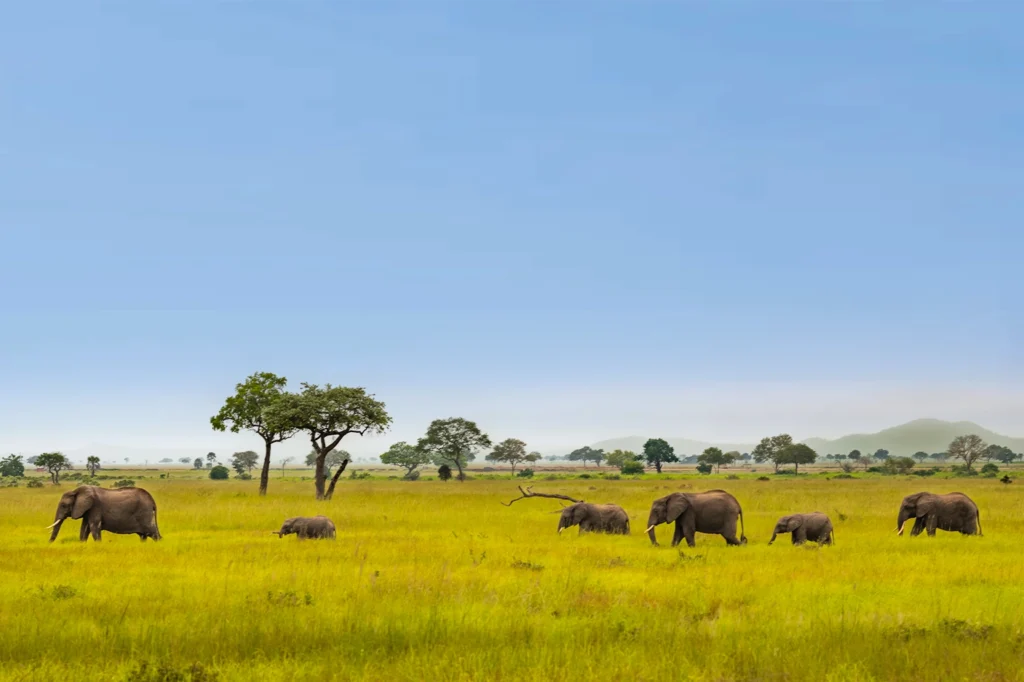
The dry season brings sunny days, cool nights and very little rain. As water holes dry up, animals crowd around rivers and lakes, so they are easier to find. The grass is also shorter, which makes spotting wildlife even simpler.
This is the best time for classic game drives and for the Mara River crossings in the northern Serengeti. However, it is also the busiest and most expensive time to travel.
The Short Rains: November to December
The short rains usually arrive as brief afternoon showers rather than all-day rain. Soon, the parks turn green, and the migration herds start moving south. In addition, migrant birds arrive from Europe and Asia, making it a great time for birdwatching.
The Short Dry Season: January to February
Between the two rainy seasons comes a warm, mostly dry break. The plains stay green, and the skies are often clear and bright, which is great for photography.
This is also the peak of the calving season in the southern Serengeti and Ndutu. As a result, it is one of the best times for predator action, with fewer visitors than in the long dry season.
The Long Rains: March to May
The long rains bring heavier, more frequent showers, especially in April and May. Some roads get muddy, and a few remote camps in the south close for the season. On the bright side, the parks are lush, crowds disappear and prices drop sharply.
What Is the Weather Like on Safari in Tanzania?
Safari weather is usually warm and sunny by day and cool at night. Daytime temperatures often reach the mid to high twenties Celsius on the plains. Meanwhile, early mornings can feel chilly, especially on open game drives.
The weather also changes with altitude. For example, the Ngorongoro Crater rim sits at over 2,000 metres, so nights there can be cold, even in summer. The coast and Zanzibar, by contrast, stay hot and humid all year.
That is why packing layers is so important. Bring a warm fleece or jacket for early mornings, light clothes for the afternoon and a hat and sunscreen for the strong sun.
Tanzania Safari Seasons Month by Month
Each part of the year offers a different safari experience. Here is what to expect, season by season.
January to February
This is one of the most exciting times of the year. The migration herds gather on the short-grass plains of the southern Serengeti and Ndutu, and thousands of calves are born each day. As a result, lions, cheetahs and hyenas stay close, so predator action is common.
The weather is warm and mostly dry between the short and long rains, making it an ideal time for a calving season safari.
March to May
The long rains arrive, and April and May are usually the wettest months. The herds begin moving north through the central and western Serengeti. Although some roads get muddy, the parks are green, quiet and full of young animals.
This is the best season for budget travellers, as many lodges cut their rates. However, a few remote camps in the south close until June.
June to October
The dry season is peak safari time. In June and July, the herds pass through the Western Corridor and cross the Grumeti River. Then, from about July to October, they reach the northern Serengeti for the dramatic Mara River crossings.
Meanwhile, Tarangire fills with elephants, and the southern parks of Nyerere and Ruaha offer superb dry-season game viewing. Book early, as the best camps fill up fast.
November to December
The short rains bring fresh grass, and the herds start heading back south. It is a lovely time for green scenery, migrant birds and fewer vehicles, with prices often lower until the Christmas holidays.
By December, the herds usually reach the southern plains again, ready for the next calving season.
When Is the Best Time to See Wildlife in Tanzania?
The best time to see wildlife in Tanzania is the dry season, from June to October. With thinner bush and fewer water sources, animals gather in predictable places, so game drives are especially rewarding.
Still, wildlife is present all year. In the green season, you trade easy spotting for baby animals, lush scenery and wonderful birdlife. In fact, many photographers love the dramatic skies and soft light of the wetter months.
What Is the Best Time to See the Big Five in Tanzania?
The dry season, from June to October, gives you the best chance to see the Big Five: the lion, leopard, elephant, buffalo and rhino. Short grass and gathered wildlife make them easier to find.
The Ngorongoro Crater offers a good chance of all five at any time of year, because its animals rarely leave. Even so, sightings are never guaranteed, so combining several parks gives you the best overall odds.
When Is the Best Time to See the Great Migration?
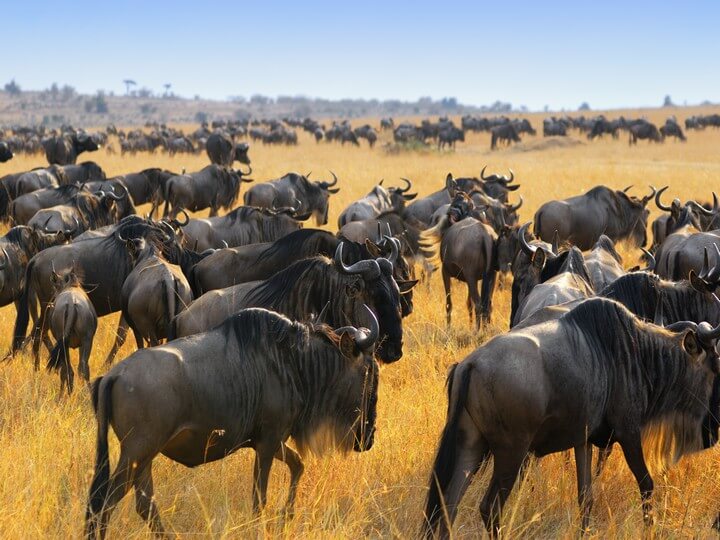
The Great Migration happens all year, but where you see it depends on the month. About 1.5 million wildebeest, along with hundreds of thousands of zebras and gazelles, follow a giant loop through the Serengeti and Kenya’s Maasai Mara. The rains guide them, as they search for fresh grass and water.
Where Are the Migration Herds Each Month?
The herds follow a rough yearly pattern, although exact timing changes with the rains. As a general guide:
✔ December to March: the herds graze the rich short-grass plains of the southern Serengeti, Ndutu and Kusini. Calving peaks in February, when up to 8,000 calves can be born in a single day. With so many newborns, lions, cheetahs and hyenas are never far away.
✔ April to May: the long rains begin, and the herds start moving north and west. They spread through the Moru Kopjes and the central Serengeti around Seronera. Columns of wildebeest stretching for kilometres are a common sight.
✔ June to July: the herds reach the Western Corridor, where they gather to cross the Grumeti River. Here, some of Africa’s largest Nile crocodiles wait in the water. This area is quieter than the north, with fewer vehicles at sightings.
✔ July to October: the herds arrive in the northern Serengeti, around Kogatende and Lamai. They cross the Mara River again and again, often moving back and forth between Tanzania and Kenya. August and September usually bring the most crossings.
✔ November: the short rains turn the land green, and the herds begin their journey back south. They pass through the eastern and central Serengeti, ready to return to the calving plains by December.
What Is the Best Month to See the Great Migration?
February is the best month for the calving season. On the southern plains, newborn calves attract lions, cheetahs and hyenas, making it the perfect time for a calving season safari full of predator action.
For the dramatic river crossings, August and September are usually best. During these months, huge herds gather on the banks of the Mara River before plunging into the water. That is why we plan every river crossing safari around the latest herd movements.
Tips for Planning a Migration Safari
Because the herds follow nature, no one can promise exact dates. However, a few simple choices give you the best chance.
- Stay longer in one area: three or four nights near the herds gives more chances for sightings.
- Choose mobile camps: these move with the migration, keeping you close to the action.
- Book early: the best camps for August, September and February fill up 6 to 12 months ahead.
- Stay flexible: our guides track the herds daily and adjust your game drives to follow them.
When Is the Best Time to Visit Each Safari Park?
Each park has its own peak season. Choosing your parks and your dates together gives you the best safari.
Serengeti National Park
The Serengeti is great all year, but the best area changes with the migration. Visit the south from December to March for calving, the west in June and July, and the north from July to October for river crossings. Meanwhile, the central Seronera area offers excellent big cat sightings in every season.
Ngorongoro Crater
The Ngorongoro Crater is excellent year-round, since most animals stay on the crater floor. The dry season gives the clearest views, while the green season brings fewer vehicles. Just pack warm clothes, as the crater rim gets cold at night.
Tarangire National Park
Tarangire is at its best from June to October. During these dry months, huge elephant herds gather along the Tarangire River. In the wet season, by contrast, many animals spread out, although the birdlife is superb.
Lake Manyara National Park
Lake Manyara is rewarding all year. The dry months bring easier game viewing, while the wetter months, from November to May, often bring large flocks of flamingos to the lake.
Southern Parks: Nyerere and Ruaha
The southern parks are best from June to October, when wildlife gathers around rivers and roads are dry. Many camps close during the long rains, from about April to May, so plan carefully.
Best Time to Climb Kilimanjaro and Visit Zanzibar
Many travellers combine a safari with a mountain climb or a beach break. Fortunately, the best months often match the safari seasons.
The best time to climb Mount Kilimanjaro is during the drier months, from January to early March and from June to October. These periods offer clearer skies and safer trails.
For Zanzibar, the best beach weather runs from June to October and December to February. In contrast, April and May bring heavy rain, so many beach resorts are quieter then.
When Is the Best Time for Birdwatching in Tanzania?
The best time for birdwatching is from November to April. During these months, migrant birds arrive from Europe and Asia, and many local birds wear their bright breeding colours.
Tanzania has more than 1,000 bird species, so every season offers something special. Still, the green months are a paradise for bird lovers, especially in Tarangire and Lake Manyara.
Is a Tanzania Safari Good in the Rainy Season?
Yes. The parks stay open all year, and the wildlife does not disappear when it rains. In fact, the green season has some real advantages.
The landscapes turn lush and beautiful, and many animals give birth, so you see plenty of young ones. There are also far fewer vehicles at sightings, and lodges often offer their best prices. Most showers are short, usually in the afternoon, leaving plenty of time for game drives.
However, some roads can get muddy in April and May, and a few remote camps close. That is why it helps to plan your route with a local expert who knows which areas work best in each season.
What Are the Best Months for a Tanzania Safari?
July, August and September are often the best months overall, with dry weather, easy game viewing and the Mara River crossings. February is another favourite, thanks to the calving season and fewer visitors than in peak months.
That said, there is no single perfect month for everyone. Instead of asking only about the best month, ask what you want to see and which parks you want to visit, then match your dates to them.
How to Choose the Best Time for Your Tanzania Trip
The right time depends on what matters most to you. Start with your main goal, then match your dates and parks to it.
- Classic wildlife and the Big Five: travel from June to October.
- Calving and predator action: choose January to February in the southern Serengeti.
- Mara River crossings: plan for July to October in the northern Serengeti.
- Lower prices and fewer crowds: consider March to May or early November.
- Birdwatching and green scenery: visit from November to April.
- Safari and beach: combine your safari with Zanzibar from June to October or December to February.
Budget matters too. Peak months cost more and book up early, while the green season offers better value. Families should also plan around school holidays, when the most popular camps fill quickly.
Is There a Perfect Time to Visit Tanzania?
There is no one perfect time for everyone, because every season offers something special. A traveller chasing the river crossings will choose different dates from someone who wants a quiet, green safari at a lower price.
The best approach is to match your travel dates to your safari goals. That way, your trip is built around what you truly want to experience, not just a general recommendation.
Common Mistakes to Avoid When Choosing Safari Dates
A little planning helps you avoid the most common timing mistakes. Here are the ones we see most often, and how to avoid them.
⚠ Booking too late: the best camps for July to October and February often fill 6 to 12 months ahead. Booking early gives you the best choice of lodges and locations.
⚠ Expecting the migration on fixed dates: the herds follow the rains, not the calendar. Instead, choose the right area for your month and stay a few nights to give yourself more chances.
⚠ Picking the wrong part of the Serengeti: a July trip to the southern plains will miss the herds. Make sure your camps match where the migration is likely to be.
⚠ Rushing through too many parks: long drives leave less time for wildlife. Fewer parks with more nights in each usually means a better safari.
⚠ Ignoring the long rains: in April and May, some roads get muddy and a few remote camps close. Check which areas work well before booking in these months.
⚠ Packing only summer clothes: early mornings and the Ngorongoro Crater rim can be cold. Always bring a warm layer, even in the hottest months.
⚠ Choosing on price alone: the cheapest month may not match what you want to see. First decide on your main goal, then compare prices for that season.
Why Plan a Safari With See Endless Adventures?
With See Endless Adventures, you never have to guess the right season on your own. Our local safari experts match your dates, parks and budget to the wildlife moments you dream of.
- Seasonal know-how: we follow the herds and weather all year, so your route fits the season.
- Tailor-made trips: every itinerary is built around your interests, pace and budget.
- Early booking help: we secure popular camps in peak months before they fill up.
- Round-the-clock support: our team is available 24/7 while you are in Tanzania.
- Fair pricing: our Best Price Promise matches a better quote for the same itinerary.
Frequently Asked Questions About the Best Time to Visit Tanzania
What is the best month to visit Tanzania for a safari?
July to September is often the best overall, with dry weather, easy wildlife viewing and Mara River crossings. February is also excellent for the calving season.
What is the best time to see the Great Migration?
The migration happens all year. Visit from December to March for calving in the south, or from July to October for river crossings in the north.
Is Tanzania good for safari all year round?
Yes. Wildlife can be seen in every month, although the weather, crowds and best areas change with the seasons.
When is the rainy season in Tanzania?
There are two rainy seasons. The short rains fall from about November to December, and the long rains from about March to May.
Is the rainy season bad for a safari?
Not at all. It brings green scenery, baby animals, fewer visitors and lower prices. However, some roads can get muddy in April and May.
When is the best time to see the Big Five?
The dry season, from June to October, is best, as animals gather near water. The Ngorongoro Crater offers a good chance of all five all year.
What is the best time to visit the Serengeti?
The Serengeti is good all year. Choose the south from December to March, or the north from July to October, depending on the migration.
What is the cheapest time to visit Tanzania?
The long rains, from March to May, are usually the cheapest, with many lodges offering their lowest rates.
What is the best time to combine a safari with Zanzibar?
June to October and December to February offer the best weather for both a safari and the beach.
How far ahead should a Tanzania safari be booked?
For peak months, booking 6 to 12 months ahead is wise, as the best camps fill up early. For the green season, a few months’ notice is often enough.
