
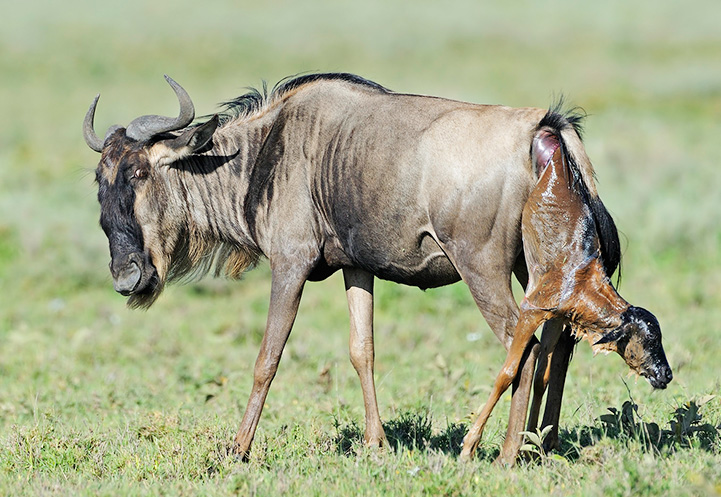
Each year, thousands of baby wildebeest are born on the green plains of Ndutu. Within minutes, the tiny calves stand up and start to walk, while lions, cheetahs and hyenas watch nearby. This is the Ndutu calving season, one of the most amazing wildlife moments in Africa.
Ndutu sits next to the southern Serengeti, where the short grass gives the herds plenty of good food after the rains. Zebras and gazelles join the wildebeest, and predators follow them, so every game drive is full of action. It is the first stage of the Great Migration.
The calving season runs from about January to March, and February is usually the best month. If you want to see newborn calves and exciting predator action, this is the perfect time to visit.
Where Is Ndutu?
Ndutu is in northern Tanzania, mostly within the Ngorongoro Conservation Area, right on the border with the southern Serengeti. The area surrounds two small soda lakes, Lake Ndutu and Lake Masek, and stretches across wide, open short-grass plains.
It lies about two to three hours’ drive west of the Ngorongoro Crater rim. As a result, Ndutu fits easily into a northern safari that also includes the Ngorongoro Crater and the central Serengeti.
When Is the Ndutu Calving Season?
The Ndutu calving season usually runs from January to March, with most calves born in late January and February. However, nature does not follow a calendar, so the exact timing changes each year with the rains.
Early Calving: January
In January, the herds settle on the southern plains and the first calves begin to appear. You will see heavily pregnant females and growing herds spreading across the green grass.
Peak Calving: February
February is usually the best month to visit. Most calves are born within a few short weeks, and predators are at their busiest, so the plains feel full of life and drama.
Late Calving: March
In March, calving slows down, and the young calves grow stronger. Meanwhile, the herds start to move north and west as the long rains begin, so their location can change quickly.
If you want the best chance of seeing newborn calves and predator action, plan your calving season safari for late January to February.
Why Do Wildebeest Give Birth in Ndutu?
Wildebeest give birth in Ndutu because the short grass on the southern plains is packed with nutrients. This rich food helps pregnant and nursing mothers stay strong and produce plenty of milk for their calves.
The secret lies under the ground. Over thousands of years, ash from nearby volcanoes has made the soil rich in minerals such as calcium and phosphorus, which pass into the grass. On top of that, the short, open grassland lets the herds spot predators early, which helps protect their young.
How Many Wildebeest Calves Are Born During Calving Season?
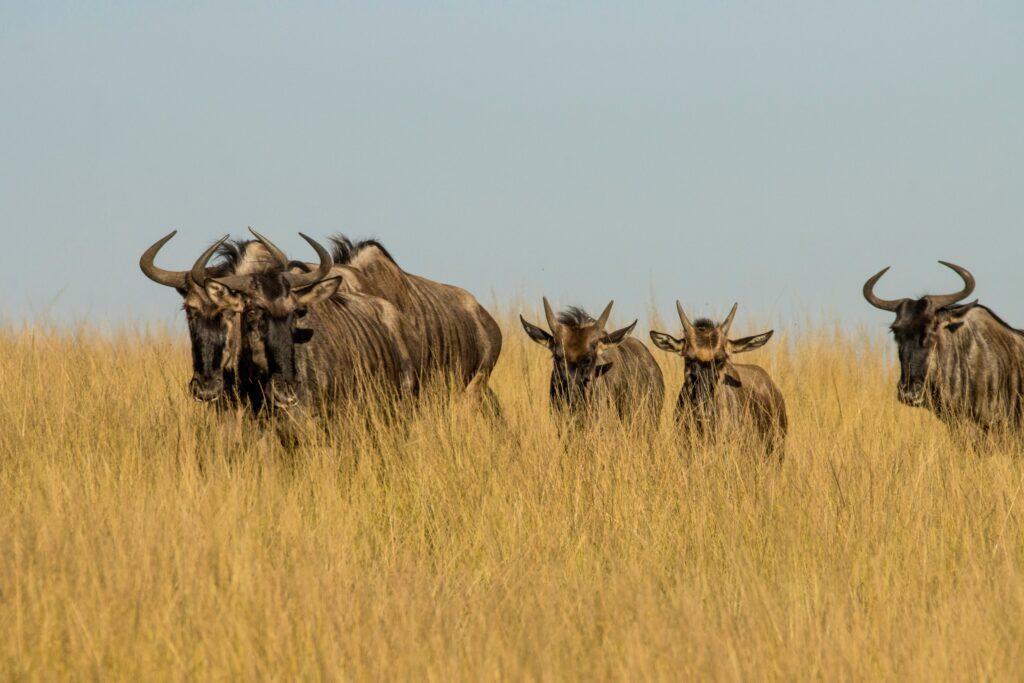
Hundreds of thousands of calves are born during the calving season, most of them within just a few weeks. At the peak, thousands of calves can arrive in a single day.
Amazingly, a newborn calf can stand within minutes and run with the herd soon after. Giving birth all at once is a clever survival plan, because predators simply cannot catch them all. So, when you visit in February, you may see mothers and tiny calves stretching across the plains as far as the eye can see.
What Animals Can Be Seen in Ndutu During Calving Season?
Ndutu is about much more than wildebeest. The huge herds attract other grazers and predators, so the calving season is one of the best times for game viewing in Tanzania.
- Grazers: wildebeest, zebras, Thomson’s gazelles, Grant’s gazelles and elands.
- Big cats: lions, cheetahs and the occasional leopard.
- Other predators: spotted hyenas, jackals and African wild cats.
- Birds: vultures, eagles, kori bustards and, at times, flamingos on the soda lakes.
Of course, sightings depend on where the herds are, the weather and the time of day.
Lions and Hyenas
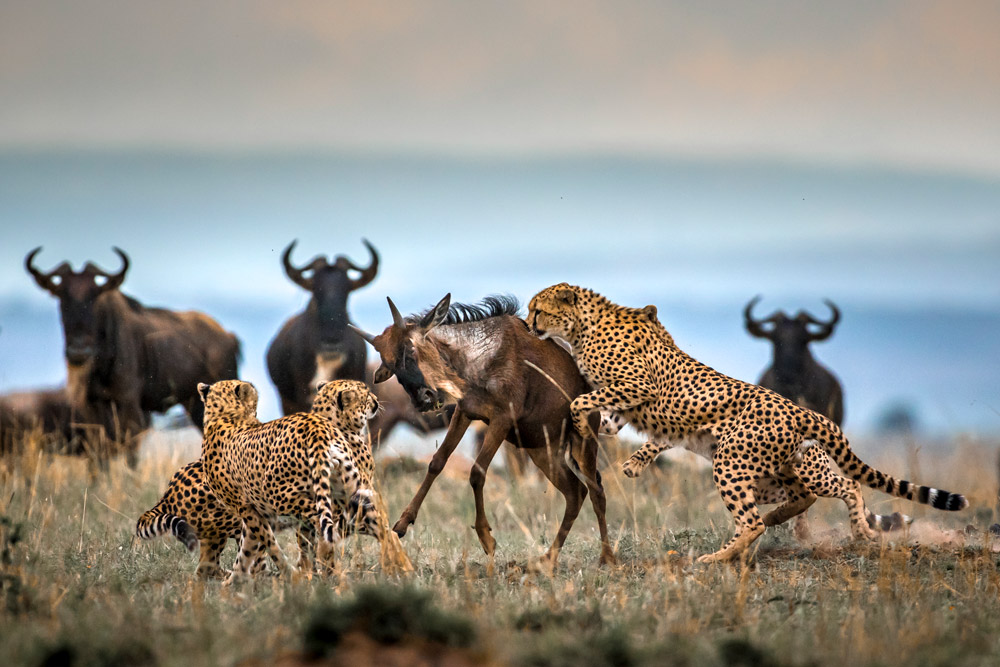
Lions and spotted hyenas follow the herds closely during the calving season. They often rest near the wildebeest by day and become active in the cool mornings and evenings.
Cheetahs
Ndutu is one of the best places in Tanzania to see cheetahs. The open plains suit their hunting style, and you may watch a mother cheetah teaching her cubs to hunt.
How Is the Calving Season Connected to the Great Migration?
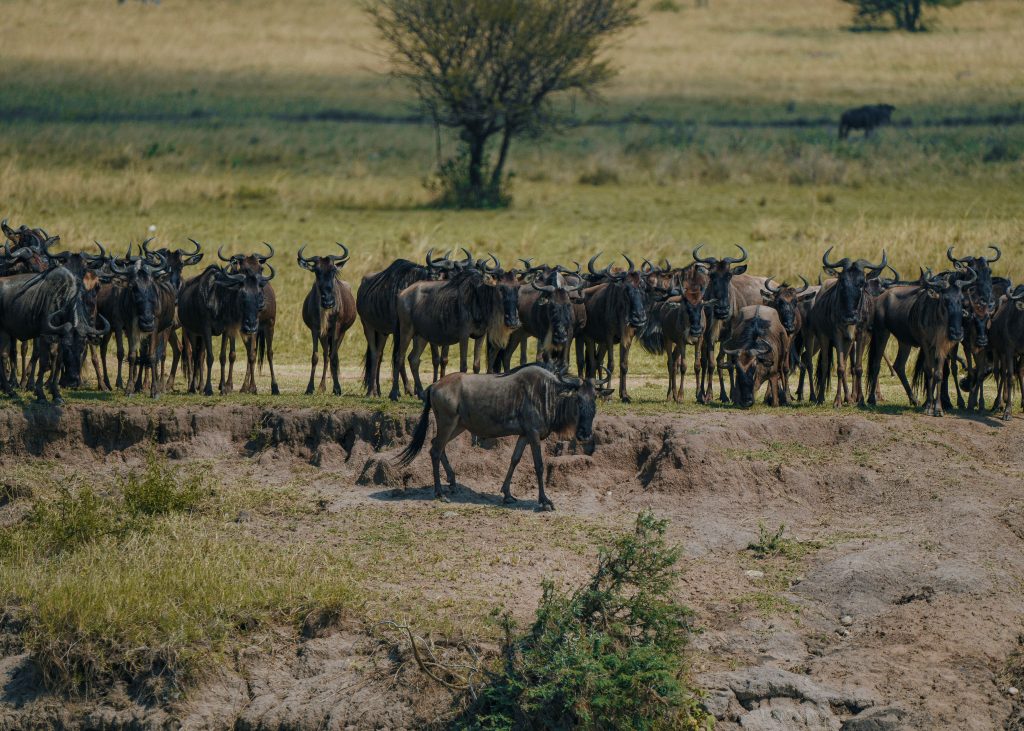
The Ndutu calving season is the first chapter of the Great Migration, the yearly journey of about 1.5 million wildebeest and hundreds of thousands of zebras. It is not a separate event, but one stage of a giant circle through the Serengeti and Kenya’s Maasai Mara.
After calving, the herds move north and west through the Serengeti, then cross the Grumeti and Mara rivers later in the year. The Tanzania National Parks Authority protects much of this route. While the river crossings are about drama, the calving season is about birth, new life and the renewal of the herds.
What Is the Weather Like During the Calving Season?
The weather during the calving season is usually warm and sunny, with short afternoon showers. After the rains, the plains turn a fresh, bright green, which makes for beautiful photos.
Early mornings can feel cool, so a warm layer is useful on sunrise game drives. Heavy rain can sometimes make the black-cotton soil muddy, which may slow down travel between areas.
What Is a Ndutu Safari Day Like?
Your day usually starts early, when the air is cool and the animals are most active. Your guide heads out to find the herds, newborn calves and the predators following them across the plains.
Around midday, you may enjoy a picnic lunch in the bush or return to camp for a rest. Then, in the afternoon, you head out again for another game drive, returning around sunset as the plains glow gold.
It is not only about ticking off animals. Instead, it is about watching a calf take its first steps, a cheetah stalking through the grass and the whole ecosystem working together.
What Are the Best Things to Do in Ndutu?
The best things to do in Ndutu are game drives among the calving herds, watching big cats, birding at the lakes and visiting nearby Olduvai Gorge. Here are the top experiences to enjoy during your stay.
Watch Newborn Calves on a Game Drive
The highlight of any Ndutu safari is seeing tiny wildebeest calves take their first steps. On early morning drives, you may even witness a birth, followed by the calf standing and running beside its mother within minutes.
Follow Lions, Cheetahs and Hyenas
With so many young animals around, predators are always close by. Ndutu is especially famous for cheetahs, and you may see a mother teaching her cubs to hunt on the open plains.
Go Bird Watching at Lake Ndutu and Lake Masek
The two soda lakes attract flamingos, storks and many water birds, while eagles and vultures soar above the plains. It is a wonderful extra for anyone who loves bird watching.
Enjoy a Hot Air Balloon Flight
During the calving season, some operators offer sunrise hot air balloon flights over the southern plains. Floating silently above the herds is an unforgettable way to see the true scale of the migration.
Visit Olduvai Gorge
Olduvai Gorge lies about an hour’s drive from Ndutu, on the way to the Ngorongoro Crater. This famous fossil site tells the story of early humans, and its small museum makes a fascinating stop.
Meet the Maasai
Maasai communities live across the Ngorongoro Conservation Area. A respectful village visit lets you learn about their homes, cattle and traditions, adding a human touch to your wildlife safari.
Enjoy Sundowners on the Plains
After an afternoon game drive, many camps set up drinks on a quiet hill as the sun goes down. Watching the golden light spread over the herds is the perfect end to a day in Ndutu.
Where to Stay During the Ndutu Calving Season
Most travellers stay in seasonal mobile camps or tented camps placed close to the herds. These camps move with the migration, so you wake up near the action and spend less time driving.
There are also a few permanent lodges around Lake Ndutu and Lake Masek, offering everything from simple tents to luxury accommodation. Because the best camps fill up quickly for February, it is wise to book 6 to 12 months ahead.
How Many Days Are Needed for a Ndutu Safari?
Two to four nights in Ndutu is ideal. This gives you several game drives in different areas and more chances to see newborn calves and predators in action.
A longer stay also means less pressure to see everything in one day. Many travellers combine Ndutu with the Ngorongoro Crater and the central Serengeti on a seven- to ten-day Ndutu calving safari.
How to Get to Ndutu
Most travellers reach Ndutu by road from Arusha, often stopping at Tarangire, Lake Manyara or the Ngorongoro Crater along the way. From the crater rim, the drive to Ndutu takes about two to three hours.
Alternatively, you can fly from Arusha to the Ndutu airstrip in about an hour, which saves time on shorter trips. Road conditions can change after rain, so your guide will plan the best route on the day.
Tips for Photographing Wildebeest Calves
The calving season is a dream for photographers, but patience is key. A telephoto lens lets you capture close-up shots of mothers and calves without disturbing them.
The soft light of early morning and late afternoon gives the best results. In addition, your guide can position the vehicle carefully, so you get great angles while keeping a respectful distance.
How to Visit Ndutu Responsibly
Mothers and newborn calves are especially sensitive, so responsible viewing really matters. A few simple habits help keep the animals calm and safe:
- Keep your distance: give mothers and calves plenty of space.
- Stay quiet: loud noise can separate a calf from its mother.
- Never feed wildlife: it changes natural behaviour and can harm animals.
- Follow your guide: respect park rules and stay on permitted routes.
- Avoid crowding: too many vehicles at one sighting stresses the animals.
Why Book a Ndutu Calving Safari With See Endless Adventures?
With See Endless Adventures, your calving safari is planned around where the herds really are. Our team follows the migration closely, so we place you in the right camp at the right time.
- Expert local guides: they read the herds and track predators every day.
- Smart camp choices: we pick camps close to the action for your dates.
- Tailor-made trips: combine Ndutu with the Ngorongoro Crater, Serengeti or Zanzibar.
- Round-the-clock support: our team is available 24/7 while you are in Tanzania.
Frequently Asked Questions About the Ndutu Calving Season
When is the Ndutu calving season?
The Ndutu calving season usually runs from January to March. The exact timing changes each year with the rains and grazing.
What is the best month for the calving season?
February is usually the best month, with the most newborn calves and plenty of predator action.
Where is Ndutu located?
Ndutu is in northern Tanzania, mostly within the Ngorongoro Conservation Area, on the border with the southern Serengeti.
Why do wildebeest give birth in Ndutu?
The short grass on the southern plains is rich in minerals from volcanic soil, giving mothers the nutrition they need.
How many calves are born each day?
At the peak, thousands of calves can be born in a single day, and hundreds of thousands are born over the whole season.
Which predators live in Ndutu?
Lions, cheetahs, spotted hyenas, jackals and occasionally leopards follow the herds during the calving season.
Is Ndutu part of the Great Migration?
Yes. The calving season is one stage of the yearly Great Migration through the Serengeti and Maasai Mara.
How many days are needed in Ndutu?
Two to four nights in Ndutu gives you the best chance to see calves and predators in action.
What should be packed for a Ndutu safari?
Bring warm layers for early mornings, a light rain jacket, binoculars, a camera with a zoom lens, sunscreen, a hat and sunglasses.
Is Ndutu worth visiting during the calving season?
Absolutely. Seeing newborn calves, huge herds and predators together is one of the most unforgettable wildlife experiences in Africa.
